
Are you curious about how wireless networks can become smarter and more efficient? Understanding the different types of cognitive radio networks can open your eyes to the future of communication.
These networks don’t just send signals—they actively sense their environment and adapt to find the best channels for communication. This means less interference, better use of available frequencies, and faster connections for you. You’ll discover the main types of cognitive radio networks, how they work, and why they matter for your everyday devices.
Keep reading to unlock the secrets behind this cutting-edge technology and see how it’s shaping the way we connect.
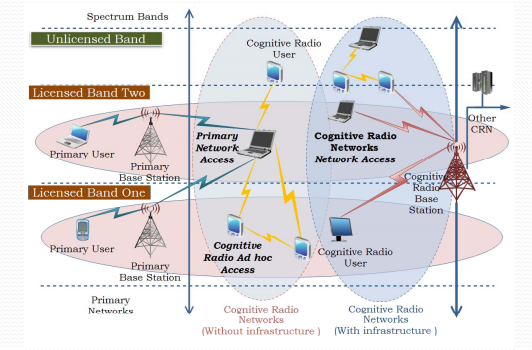
Spectrum Sharing Models
Spectrum sharing models form the backbone of cognitive radio networks. They define how unlicensed users access the frequency bands without disturbing licensed users. Each model uses a unique strategy to manage spectrum access efficiently. Understanding these models helps improve wireless communication and resource use.
Interweave Networks
Interweave networks allow unlicensed users to transmit only when the licensed spectrum is idle. They scan the spectrum to find unused channels. Once detected, they “interweave” their signals into these free spaces. This model avoids interference by staying clear of active licensed users.
This approach requires accurate sensing to prevent collisions. It suits environments with many unused channels. Interweave networks maximize spectrum use without harming licensed transmissions.
Underlay Networks
Underlay networks let unlicensed users share the spectrum simultaneously with licensed users. They keep their transmission power very low to avoid interference. This model relies on strict power limits and advanced signal processing.
Underlay networks work well in dense areas where spectrum is scarce. They allow continuous communication but need careful control to protect licensed users. This model helps use spectrum more densely and efficiently.
Overlay Networks
Overlay networks use knowledge about licensed users’ signals to share spectrum. Unlicensed users assist licensed transmissions while sending their own data. They may use techniques like coding or relaying to improve licensed user performance.
This cooperation allows unlicensed users to transmit without causing harm. Overlay networks require complex coordination and signal processing. They create a smart environment where users help each other share the spectrum.

Network Architectures
The architecture of cognitive radio networks defines how devices connect and share information. It impacts the network’s efficiency, scalability, and reliability. Different architectures suit different applications and environments. Understanding these types helps in choosing the right system for specific needs.
Centralized Cognitive Networks
Centralized cognitive networks rely on a main controller or base station. This controller manages spectrum sensing and allocation for all devices. It collects data from users, makes decisions, and assigns channels accordingly. This setup simplifies coordination and reduces conflicts among users.
Such networks are easy to manage and monitor. The main controller has a global view of the network state. It can optimize resource use and improve overall performance. However, the system depends heavily on the controller’s availability and processing power.
Distributed Cognitive Networks
Distributed cognitive networks have no central controller. Devices sense the spectrum independently and communicate with each other. They share information to decide which channels to use. This approach increases network flexibility and resilience.
Each device acts as a decision-maker and a relay. The network adapts quickly to changes and avoids single points of failure. Coordination among devices requires efficient algorithms to prevent interference. Distributed networks work well in dynamic or large-scale environments.
User-based Classifications
User-based classifications focus on how different users interact within cognitive radio networks. These classifications help define roles and access rights. They ensure efficient spectrum use and avoid interference.
Understanding user roles clarifies network design and operation. It also supports better management of radio resources.
Primary And Secondary User Networks
Primary users have licensed access to specific frequency bands. They hold priority and protection rights over these channels.
Secondary users access the spectrum opportunistically. They use the bands only when primary users are inactive.
This dynamic allows better spectrum utilization without disturbing primary users. Secondary users must vacate channels immediately if the primary user returns.
Hybrid User Networks
Hybrid networks combine features of both primary and secondary user networks. They allow more flexible spectrum sharing.
In these networks, some users have primary rights while others act as secondary users. This setup improves spectrum efficiency and user cooperation.
Hybrid networks use advanced sensing techniques to detect available channels quickly. They adapt to changing conditions to maximize spectrum use.

Application-specific Networks
Application-specific cognitive radio networks are designed to meet unique communication needs. These networks focus on particular fields where reliable and flexible wireless connections are crucial. By adapting to the specific environment and user demands, they optimize performance and resource use.
These networks offer tailored solutions for various sectors. Each type serves a distinct purpose with specialized features. Below are three main categories of application-specific cognitive radio networks.
Public Safety Networks
Public safety networks support emergency responders and disaster relief teams. They provide fast, clear communication during crises. Cognitive radios help avoid channel interference and maintain connections. This ensures first responders get real-time updates and coordinate effectively.
These networks prioritize reliability and coverage. They adapt to changing conditions and crowded radio spectrums. The technology helps in managing scarce spectrum resources during large-scale emergencies.
Commercial Networks
Commercial cognitive radio networks focus on improving user experience in businesses. They enable better spectrum use in crowded urban areas. Retail stores, office buildings, and public venues benefit from seamless wireless access. Adaptive radios reduce dropped calls and improve data speeds.
These networks adjust dynamically to traffic demands. They support high-capacity data transmission and Internet of Things (IoT) devices. This flexibility helps businesses maintain smooth communication and operations.
Military Networks
Military cognitive radio networks secure battlefield communication. They ensure robust and flexible links in hostile environments. These networks avoid jamming and interception by enemy forces. Radios switch channels automatically to maintain signal integrity.
Military networks require high security and low latency. Cognitive radios meet these needs by sensing spectrum and adapting quickly. This technology supports command and control, reconnaissance, and troop coordination.
Learning And Adaptation Types
Learning and adaptation are key features of cognitive radio networks. These networks adjust their operations based on the environment. They learn from past experiences and adapt to new conditions. This ability allows for better use of the radio spectrum and reduces interference.
Different types of cognitive radio networks vary in how much learning and adaptation they perform. Some have full learning capabilities, while others have limited or partial adaptation. Intelligent radio networks use advanced methods to improve their performance continuously.
Full Cognitive Radio
Full cognitive radios have complete learning and adaptation functions. They sense all aspects of the radio environment. These radios analyze signal strength, interference, and user behavior. Then, they make decisions to optimize communication channels. Full cognitive radios can switch frequencies and modify transmission parameters automatically. This ensures efficient spectrum use and minimal interference.
Partial Cognitive Radio
Partial cognitive radios have limited learning abilities. They focus on specific tasks, such as detecting free channels only. These radios adapt some parameters but do not fully analyze the environment. Partial cognitive radios are simpler and require less power. They are suitable for devices with limited processing capabilities. Despite fewer features, they still improve spectrum use and reduce conflicts.
Intelligent Radio Networks
Intelligent radio networks use advanced learning techniques like machine learning. These networks learn patterns over time and predict future conditions. They cooperate with other radios to share information and optimize spectrum use. Intelligent networks adapt faster and more accurately than basic radios. They support complex environments with many users and changing conditions. This type improves overall network efficiency and user experience.
Frequently Asked Questions
What Are Cognitive Radio Networks?
Cognitive radio networks use smart transceivers to detect and switch to unused communication channels. They optimize spectrum use without interfering with licensed users.
What Are The Different Types Of Radio Networks?
Radio networks include simplex (one-to-many) broadcast networks and duplex (two-way) radio networks. Simplex suits mass media; duplex serves public safety and services.
What Are The 5 C’s Of Radio Communication?
The 5 C’s of radio communication are Concise, Clear, Confident, Controlled, and Capable. They ensure effective and precise message delivery.
What Are The Four Types Of Radio Broadcasting?
The four types of radio broadcasting are AM (Amplitude Modulation), FM (Frequency Modulation), DAB (Digital Audio Broadcasting), and Internet radio. Each type uses different technology to transmit audio signals to listeners.
Conclusion
Cognitive radio networks adapt to changing wireless environments quickly. Different types serve unique communication needs and improve spectrum use. These networks help avoid interference and support efficient data transfer. Understanding their types aids in choosing the best option for any task.
Technology advances will keep making these networks smarter and more reliable. Staying informed about cognitive radio networks is important for future communication.