
Are you curious about 3D TVs but unsure which type suits your needs best? Choosing the right 3D TV can transform how you watch movies, sports, and games, making every scene pop with stunning depth and realism.
You’ll discover the main types of 3D TVs, how they work, and which one fits your lifestyle and budget. By the end, you’ll feel confident picking the perfect 3D TV that brings your favorite content to life like never before.
Keep reading to find out what makes each type unique and why it matters for your viewing experience.
Active 3d Technology
Active 3D technology creates a deep, immersive viewing experience. It uses special glasses that work with your TV. These glasses quickly open and close shutters over each eye. This method shows a slightly different image to each eye, making the picture appear three-dimensional. Active 3D delivers sharp and clear images with great depth.
How Active Shutter Glasses Work
Active shutter glasses sync with the TV screen. They alternate blocking the left and right eyes very fast. This happens hundreds of times each second. Each eye sees the correct image at the right time. The brain combines these images to create a 3D effect. The glasses use batteries and a wireless signal to stay in sync.
Pros And Cons Of Active 3d
Active 3D offers high-quality images and good depth perception. The picture is bright and sharp because the glasses do not reduce light much. This technology supports full HD resolution for each eye. The glasses are lightweight but need batteries and charging. Some users may find the flickering uncomfortable or get tired eyes. Active 3D systems are usually more expensive than passive 3D setups.
Popular Brands Using Active 3d
Many well-known TV brands use active 3D technology. Sony and Samsung have popular models with active shutter glasses. Panasonic also offers TVs with this system. These brands focus on good image quality and 3D depth. Their active 3D TVs often come with extra features for better viewing. They provide a reliable choice for 3D TV enthusiasts.
Passive 3d Technology
Passive 3D technology offers a simple way to watch 3D content. It uses special glasses to separate images for each eye. This creates a three-dimensional effect without heavy or complex equipment. Many people prefer passive 3D because it is comfortable and easy to use.
Polarized Glasses Explained
Polarized glasses have lenses with different polarizations. Each lens filters light waves in a unique direction. This lets each eye see a slightly different image. The brain combines these images to create depth. These glasses are lightweight and do not need batteries.
Advantages Of Passive 3d
Passive 3D glasses are cheaper than active ones. They are light and easy to wear for long periods. The technology works well in bright rooms. There is less flickering and eye strain. Many viewers find passive 3D more comfortable overall.
Common Uses And Devices
Passive 3D is popular in movie theaters and home TVs. Many 3D TVs use this technology for a better viewing experience. Some gaming consoles and Blu-ray players support passive 3D. It is also common in sports broadcasts and educational videos.
Glasses-free 3d Displays
Glasses-free 3D displays offer a new way to enjoy three-dimensional images without wearing special glasses. These screens create depth and dimension that pop right out of the screen. They make watching 3D content more natural and comfortable for many viewers.
These displays use advanced technology to send different images to each eye. This tricks the brain into seeing a 3D effect. The experience feels more real and immersive, as objects seem to float or move within the screen.
Autostereoscopic Screens
Autostereoscopic screens show 3D images without glasses. They use tiny lenses or barriers to direct light to each eye separately. This method creates a sense of depth without extra devices.
These screens come in two main types: parallax barrier and lenticular lens. Parallax barriers have slits that block parts of the screen from each eye. Lenticular lenses use small lenses to focus light differently for each eye.
Autostereoscopic displays work best at certain angles and distances. They provide a clear 3D effect for one or two viewers at a time.
Challenges And Limitations
Glasses-free 3D displays face some challenges. The viewing angle is often narrow. People must sit in a specific spot to see the 3D image well.
The resolution of the 3D image can be lower than 2D screens. This happens because the screen splits the image for each eye.
Watching 3D for a long time might cause eye strain or discomfort. This limits the time people want to use these displays.
Future Of Glasses-free 3d
Technology is improving to solve current problems. New designs aim to widen viewing angles and boost image quality. Researchers are exploring eye-tracking to adjust images in real time.
More content creators are making 3D videos for glasses-free screens. This will increase the appeal and usefulness of these displays. The future may bring more affordable and user-friendly glasses-free 3D TVs.
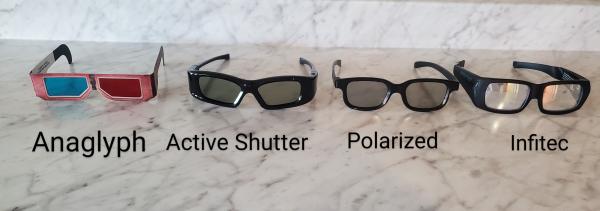
Comparison Of 3d Tv Types
Choosing the right 3D TV means understanding the differences between types. Each type offers unique features that affect viewing quality, cost, and user comfort. Comparing these factors helps pick the best option for your needs.
Image Quality Differences
Active 3D TVs provide sharp and bright images with deep colors. They use shutter glasses that sync with the screen. Passive 3D TVs use polarized glasses, which can reduce brightness. The image may appear softer but feels natural to many viewers. Some TVs use glasses-free 3D technology, but the picture can be less clear and have limited viewing angles.
Cost Considerations
Active 3D TVs usually cost more due to complex technology. You must also buy expensive active shutter glasses. Passive 3D TVs are cheaper and glasses are easy to find. Glasses-free 3D TVs often have the highest price because of advanced screens. Consider long-term costs like extra glasses and replacements.
User Experience Factors
Active 3D glasses are heavier and need batteries. This can cause eye strain during long use. Passive glasses are lightweight and comfortable to wear. Glasses-free 3D TVs do not require glasses but limit where you can sit. Some users feel dizzy or tired with certain 3D types. Testing different TVs can help find the best fit for comfort.
3d Content Compatibility
3D TVs bring images to life with depth and realism. But not all 3D content works on every 3D TV. Compatibility depends on formats and devices. Understanding 3D content compatibility helps you enjoy the best experience.
Supported Formats
3D TVs support various content formats. Common types include side-by-side, top-and-bottom, and frame-packed. Each format displays 3D differently. Your TV must recognize the format for proper viewing. Check your TV’s manual for supported formats. Some TVs handle multiple formats, offering more viewing options.
Streaming Vs Blu-ray
Streaming 3D content requires a fast internet connection. Services offer limited 3D titles, often in side-by-side or top-and-bottom formats. Blu-ray discs provide higher quality 3D videos. They use frame-packed format for sharper images. Blu-ray players and 3D TVs must support this format to play discs correctly.
Gaming On 3d Tvs
3D gaming adds a new layer of immersion. Consoles like PlayStation and Xbox support 3D games on compatible TVs. Games use side-by-side or frame-packed formats. Check if your game and console support 3D output. Proper glasses and TV settings enhance the gaming experience.
Frequently Asked Questions
What Are The Main Types Of 3d Tvs Available?
3D TVs mainly come in two types: active shutter and passive 3D. Active shutter TVs use battery-powered glasses. Passive 3D TVs use lightweight polarized glasses.
How Does Active Shutter 3d Tv Technology Work?
Active shutter TVs show images by blocking each eye alternately. Glasses sync with the TV to create a 3D effect. This gives sharper and clearer 3D images.
What Is Passive 3d Tv And Its Benefits?
Passive 3D TVs use polarized glasses to show different images to each eye. The glasses are cheap and don’t need batteries. This type is comfortable for long watching.
Can 3d Tvs Display 3d Without Glasses?
Some 3D TVs use glasses-free or autostereoscopic technology. They use special screens to show 3D images. These TVs are rare and usually more expensive.
Which 3d Tv Type Is Best For Movies?
Active shutter TVs offer better picture quality and depth for movies. Passive 3D TVs are easier to use and more comfortable. Choose based on your budget and viewing habits.
Conclusion
Choosing the right 3D TV depends on your needs and budget. Active and passive types offer different experiences. Each has pros and cons to consider. Think about viewing comfort and picture quality. Remember, 3D TVs can enhance movies and games.
Keep these types in mind when shopping. Enjoy clearer images and immersive visuals. Your perfect 3D TV is out there waiting. Take time to explore options before buying. This helps you get the best value and fun.