
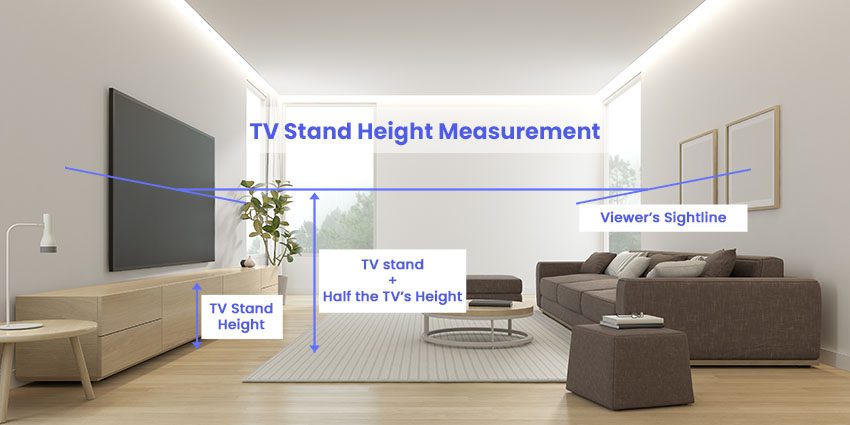
A TV stand should be high enough that the center of the screen sits at about eye level when you’re seated, which is usually the most comfortable viewing position. For most living rooms, that puts the top of the stand around 20–30 inches (51–76 cm) tall, depending on your couch height and TV size. A simple rule is to sit where you watch most, measure your eye height from the floor, then choose a stand that places the middle of the TV close to that height.
Ideal Tv Height
A TV stand should place the screen at eye level when seated. This height reduces neck strain and improves comfort. Ideally, the center of the TV sits about 42 inches from the floor.
Choosing the right height for your TV stand improves your viewing comfort. The goal is to keep your neck and eyes relaxed during watching. A TV placed too high or too low causes strain and discomfort.
Setting the ideal height depends on your seating and TV size. Measuring your eye level and calculating the screen’s center are key steps. This ensures a natural and pleasant viewing angle for everyone.
Eye Level Measurement
Start by sitting in your usual viewing spot. Measure the height from the floor to your eyes. This number gives a good baseline for your TV placement. For most adults, eye level is around 40 to 42 inches from the floor.
Keep this height consistent for all viewers. If multiple seating options exist, find an average eye level. This helps place the TV where it suits the whole room.
Center Of Screen Calculation
Next, measure the height of your TV screen. Divide this number by two to find the center. The center of the screen should align with your eye level measurement. This alignment avoids looking too far up or down.
For example, if your eye level is 42 inches and your TV is 24 inches tall, place the bottom of the TV stand about 30 inches high. This keeps the screen center at 42 inches, matching your eye level.
Choosing The Right Stand
Picking the right TV stand is key for comfort and style. The stand must fit your TV perfectly. It should keep the screen at eye level for easy viewing. A stand that is too tall or too short can cause neck pain. Also, the stand should match your room’s size and design. A well-chosen stand improves your watching experience and room look.
Consider the TV size and the space available. The stand must be stable and strong to hold the TV safely. Storage options in the stand can help keep your area neat. Think about cable management to avoid messy wires. The right stand balances function and beauty.
Matching Stand To Tv Size
The stand should be wider than your TV. This prevents the TV from tipping over. Check the TV base size before buying a stand. A stand too small feels unstable and unsafe. A much larger stand may look odd and take too much space. Choose a stand that fits well with your TV size.
Avoiding Screen Obstruction
The stand must not block any part of the screen. Ensure the TV sits above the stand’s edges. Avoid tall decorations or speakers that can cover the screen. Keep the area in front of the TV clear. This helps you see the whole picture without distraction. Proper clearance also allows easy access to ports and buttons.
Seating And Viewing Distance
Seating and viewing distance play a key role in setting the right TV stand height. The height affects comfort and picture clarity. Choosing the proper height depends on where you sit and how far you are from the screen.
Good viewing begins with the right eye level and distance. This helps reduce neck strain and eye fatigue. Let’s explore how seating height and viewing distance impact your TV setup.
Impact Of Seating Height
Your eye level while seated guides the TV stand height. Ideally, the center of the screen matches your eyes. Sitting too low or high means you tilt your head awkwardly. This causes discomfort over time. A TV stand that fits your seating height keeps viewing natural and easy.
Measure your eye height while sitting. Most adults sit with eyes 40 to 42 inches from the floor. Adjust the TV stand to place the middle of the screen near this height. This positioning creates a relaxed and enjoyable viewing angle.
Optimal Viewing Distance
Distance from the TV also matters. Too close can strain your eyes. Too far means you miss details. The ideal distance depends on your TV size and resolution.
A good rule is to sit 1.5 to 2.5 times the diagonal size of your TV. For example, a 50-inch TV fits best at 75 to 125 inches away. This range balances clarity with comfort.
Keep your seating and TV stand height balanced with this distance. Proper setup improves picture quality and reduces fatigue. Your viewing experience becomes more immersive and pleasant.

Credit: www.realcozy.co
Common Mistakes
Choosing the right height for a TV stand seems simple but many make common mistakes. These errors can cause discomfort and reduce your viewing pleasure. Avoiding these pitfalls helps create a better TV setup. Below are two frequent mistakes to watch out for.
Stand Too Low Or High
A TV stand that is too low forces you to look down, straining your neck. A stand that is too high makes you look up, causing discomfort. The ideal height keeps the center of the screen at eye level when seated. This reduces eye and neck strain during long watching sessions. Check your seating height before picking a stand.
Ignoring Room Layout
The room layout affects the best TV stand height. Placing the TV too high or low without considering furniture position is a mistake. Think about where you sit and how far you are from the TV. Also, consider windows and lighting to avoid glare. Adjust the stand height so everyone in the room has a clear view. Planning the layout first leads to a comfortable setup.
Additional Placement Tips
Choosing the right height for your TV stand is important. Placement also depends on room setup and viewing habits. Below are tips to help place your TV perfectly.
Adjusting For Multiple Seating Areas
Rooms with many seats need careful TV placement. The TV should be visible from all spots. Raise the stand slightly if seats are at different heights. Tilt the TV downwards to reduce glare for distant viewers. Consider a swivel stand to adjust angles easily. This makes watching comfortable for everyone.
Considering Wall-mounted Tvs
Wall-mounted TVs need different height rules. The center of the screen should be at eye level when seated. Measure the average sitting height of viewers. Mount the TV so the bottom edge is not too high. Leave space below for a soundbar or console. This setup keeps the room neat and improves viewing comfort.
Credit: www.sierralivingconcepts.com
Materials And Design
Choosing the right materials and design for your TV stand affects both function and look. The height of the stand must suit your TV size and room setup. Materials influence the stand’s durability and style. Design impacts how well the stand fits with your space and keeps your TV stable.
Stand Stability And Safety
Strong materials support the TV securely. Wood, metal, and engineered wood are common choices. Solid wood offers great strength and lasts long. Metal frames add extra stability and a modern touch. Check the weight limit of the stand. A stand too weak may tip over or collapse.
Design matters for safety. Wide bases and low centers of gravity reduce risks. Shelves and compartments should hold devices without clutter. Cable management helps avoid tripping hazards. Rounded edges make the stand safer, especially for homes with kids.
Style And Room Decor
The TV stand should match your room’s style. Choose materials that blend with furniture and walls. Light woods brighten spaces. Dark woods add warmth and richness. Metal or glass fits modern and minimalist rooms.
Design details like color, texture, and shape set the mood. Open shelves show off decor pieces and devices. Closed cabinets hide clutter for a clean look. Consider the room size. Sleek, simple designs work well in small rooms. Larger rooms handle bold, chunky styles.

Credit: www.livingspaces.com
Conclusion
Choosing the right TV stand height makes watching more comfortable. Aim to keep the screen at eye level when seated. Too high or too low can cause neck or eye strain. Measure your seating height and adjust the stand accordingly.
A well-placed TV stand improves your room’s look and your viewing experience. Keep it simple and functional for everyday comfort. This small change can make a big difference in how you enjoy your TV.