
A TV can be mounted on drywall only in limited cases. If you bolt the mount into studs behind the drywall, it’s safe for almost any TV. But mounting into drywall alone (using anchors) is only okay for small, lightweight TVs with a fixed mount and the right heavy-duty anchors—full-motion mounts are a bad idea because the pulling force can rip the anchors out. For anything mid-size or expensive, always hit studs or use a backer board.
Drywall Limitations
Drywall is a common wall material in homes. It looks smooth and clean but has limits. These limits matter when mounting a TV on it. Understanding drywall’s weaknesses helps avoid accidents and damage.
Many try to mount a TV directly on drywall. This often causes problems. Drywall alone cannot hold much weight. It may break or crumble under pressure.
Weight Capacity Issues
Drywall can hold only light loads. Most TVs are heavy and pull on the wall. The drywall will not support the TV’s full weight. This can cause the mount to fail and the TV to fall.
Mounting hardware must be attached to wall studs behind drywall. Studs carry the weight safely. Relying on drywall alone is risky and unsafe.
Risk Of Wall Damage
Heavy TVs press hard on drywall. This pressure can create cracks or holes. Over time, the wall surface may crumble or weaken. Repairs can become costly and time-consuming.
Drywall anchors help but have limits. They may loosen or pull out with weight shifts. This weakens the mounting and damages the wall further.
Stress From Tv Movement
TVs may move slightly when adjusted or bumped. This movement adds stress to the drywall mount. Drywall is brittle and can crack under repeated stress.
Even small vibrations can loosen fasteners in drywall. This increases the chance of the TV falling. A strong, stud-based mount reduces this risk greatly.

Credit: blog.primecables.ca
Stud Anchoring
Stud anchoring provides the strongest support for mounting a TV. Drywall alone cannot hold heavy weight safely. Attaching the TV mount directly to studs prevents damage and accidents. This method ensures your TV stays secure on the wall.
Understanding stud anchoring is key to a safe installation. The following steps explain how to find studs, use lag bolts, and why this method is best.
Finding Wall Studs
Wall studs are vertical wooden beams behind drywall. A stud finder tool helps locate them easily. Move the stud finder slowly across the wall surface. It beeps or lights up over a stud. Mark the stud edges with a pencil. Studs usually sit 16 or 24 inches apart. Confirm by tapping the wall for a solid sound. Avoid guessing to prevent weak mounting.
Using Lag Bolts
Lag bolts are heavy-duty screws designed for wood. They fasten the TV mount directly to the studs. Drill pilot holes first to avoid splitting the wood. Use a wrench or socket driver to tighten lag bolts firmly. Ensure bolts penetrate deep into the stud for strong hold. Avoid over-tightening, which can damage the wood or bolt.
Benefits Of Stud Mounting
Stud mounting secures the TV safely and prevents wall damage. It supports heavy TVs without risking the drywall breaking. This method reduces vibrations and keeps the TV steady. Stud mounting also allows precise positioning of the TV. It offers peace of mind knowing the TV will stay in place. This method is the safest and most reliable option.
Reinforcing Plates
Reinforcing plates provide extra strength when mounting a TV on drywall. They help spread the TV’s weight across a larger area. This reduces pressure on the drywall and prevents damage. Reinforcing plates are useful when wall studs are not in the ideal position. They create a stable base for the TV mount, ensuring safety and durability.
Materials For Plates
Common materials for reinforcing plates include plywood, metal, and MDF. Plywood is strong and easy to cut. Metal plates offer high durability and resist bending. MDF plates are smooth and simple to paint. Choose a material that matches your wall type and load needs. The plate should be thick enough to hold the TV securely.
Mounting Across Multiple Studs
Reinforcing plates work best when attached across multiple studs. This distributes the TV’s weight evenly. Use a long plate that spans at least two studs. Secure the plate firmly with screws into the studs. Then attach the TV mount to the plate. This method provides a strong foundation and prevents drywall damage.
Installation Tips
Measure carefully to place the plate exactly where the mount needs support. Use a level to keep the plate straight. Pre-drill holes to avoid splitting the wood or metal. Tighten screws firmly but avoid over-tightening. Check the plate and mount for stability before hanging the TV. These steps ensure a safe and secure installation.
Drywall Anchors Options
Mounting a TV on drywall requires strong support. Drywall alone cannot hold heavy loads safely. Drywall anchors help secure the TV mount when studs are not accessible. Several drywall anchor options exist, each with unique designs and weight limits. Choosing the right anchor is key for a safe and stable installation.
Toggle Bolts
Toggle bolts are strong anchors with metal wings. The wings open behind the drywall to spread the load. They hold heavy items well, making them ideal for TV mounts. Installation needs a larger hole for the wings to fit through. Once tightened, toggle bolts provide firm support and resist pulling out.
Snap Togglers
Snap togglers are easy-to-install anchors with a plastic sleeve and metal channel. The channel snaps open behind the drywall, creating a secure hold. These anchors work well for medium to heavy loads. They require a smaller hole than toggle bolts. Snap togglers allow quick and reliable mounting with good weight distribution.
Anchor Strength And Limitations
Each anchor type has a maximum weight limit. Exceeding this limit risks wall damage and TV falling. Toggle bolts generally support heavier weights than snap togglers. Drywall thickness and condition affect anchor performance. Always check the anchor’s weight rating before installation. For very heavy TVs, mounting into studs is safer than relying on anchors alone.
Choosing The Right Mount
Choosing the right mount is key to a safe and stable TV installation on drywall. The mount must support the TV’s size and weight. It should also fit your wall type and your viewing needs. Picking the correct mount helps prevent damage to your wall and TV. Below are important points to consider when selecting a mount.
Fixed Vs Full-motion Mounts
Fixed mounts hold the TV flat against the wall. They save space and offer a clean look. These mounts do not move or tilt. Full-motion mounts allow you to tilt, swivel, and extend the TV. They give more flexibility to adjust the screen angle. Choose fixed mounts for simple setups. Pick full-motion mounts if you need to change the viewing angle.
Weight Ratings
Every TV mount has a weight limit. This limit must match or exceed your TV’s weight. Using a mount that is too weak can cause it to fail. Check the mount’s specifications before buying. Always consider the total weight of the TV and any accessories. Staying within weight ratings ensures safety and stability.
Wall Compatibility
Not all mounts work on every wall type. Drywall alone cannot hold a TV mount securely. The mount must attach to wall studs or use strong anchors. Some mounts come with hardware for different wall types. Make sure the mount fits the spacing of your studs. Confirm the mount’s compatibility with drywall and your wall’s condition.
Safety Tips
Mounting a TV on drywall requires careful attention to safety. Drywall alone cannot hold the weight of a TV. Poor mounting can lead to accidents and damage. Follow these safety tips to ensure a secure and stable setup. Proper installation protects your TV and your wall.
Avoiding Common Mistakes
Do not mount the TV directly into drywall without support. Drywall can crumble or crack under heavy weight. Always locate wall studs before drilling. Use a stud finder to find strong anchors. Avoid using weak or small screws. Follow the mount manufacturer’s instructions carefully.
Distributing Load Properly
Spread the TV’s weight across several studs if possible. Use a mounting bracket that covers multiple points. This reduces stress on one area of the wall. If studs are not available, use heavy-duty toggle bolts. Make sure the bolts are rated for your TV’s weight. Proper load distribution prevents wall damage and keeps the TV secure.
Securing Heavy Tvs
Heavy TVs need extra care during mounting. Use reinforced mounting plates if needed. Secure the mount firmly into the studs. Check all bolts and screws for tightness. Consider professional help for very large or heavy TVs. Regularly inspect the mount to ensure it remains stable. Safety first keeps your TV and home protected.
Diy Installation Steps
Mounting a TV on drywall is possible with the right steps. Doing it yourself saves money and gives control over placement. Follow these simple DIY installation steps to mount your TV safely and securely.
Tools Needed
- Stud finder
- Drill with drill bits
- Screwdriver
- Measuring tape
- Level
- Wall mount bracket
- Socket wrench
- Pencil for marking
- Tape for cable management (optional)
Marking And Drilling
Use the stud finder to locate the wall studs behind the drywall. Mark the stud centers with a pencil. Measure the height where you want the TV to hang. Hold the mounting bracket against the wall, aligning it with the stud marks. Use a level to keep the bracket straight. Mark the drilling spots through the bracket holes on the wall.
Drill pilot holes on the marked spots. Choose drill bits that match the size of the mounting screws. Drilling pilot holes prevents drywall damage and helps screws go in smoothly.
Final Mounting And Testing
Attach the mounting bracket to the wall using screws and a socket wrench. Ensure the bracket is firmly secured to the studs. Hang the TV on the bracket following the manufacturer’s instructions. Check the TV’s stability by gently shaking it. Adjust if needed to make sure it is secure and level.
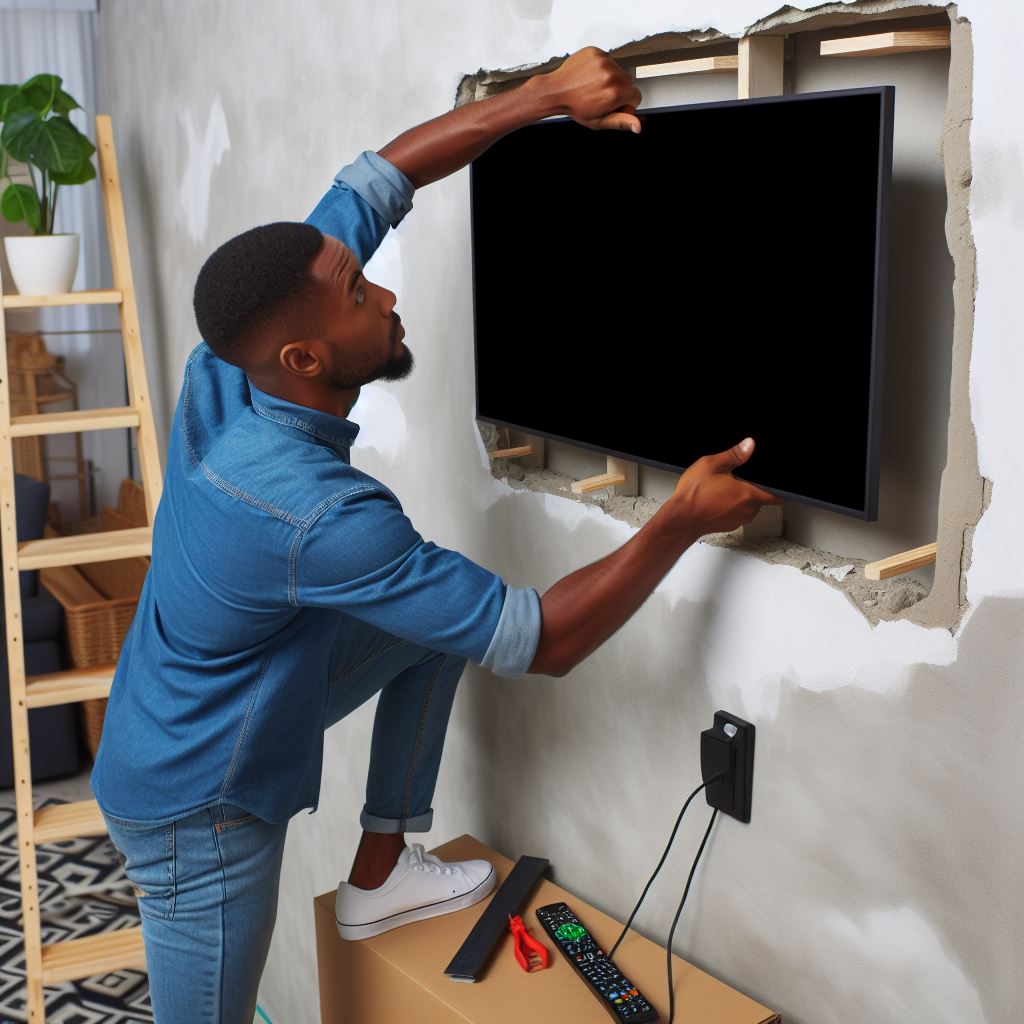
Credit: condomounts.com

Credit: www.youtube.com
Conclusion
Mounting a TV on drywall requires careful planning and the right tools. Always find and use wall studs for strong support. Drywall alone cannot hold the weight safely. Use proper anchors or reinforcing plates if studs are not in the right spot.
This prevents damage to your wall and TV. Taking these steps keeps your TV secure and your space safe. Safety and stability matter most when mounting on drywall.