
If you’re diving into the world of ham radio, one question probably stands out: which antenna should you use? The type of ham radio antenna you choose can make a huge difference in how far your signal travels, how clear your communication is, and how easy it is to set up.
Whether you’re a beginner or looking to upgrade your gear, understanding the different types of ham radio antennas is key to getting the most out of your hobby. You’ll discover the main antenna options, their strengths, and how to pick the right one for your needs.
Ready to boost your signal and connect like never before? Let’s explore the types of ham radio antennas that can transform your setup.

Wire Antennas
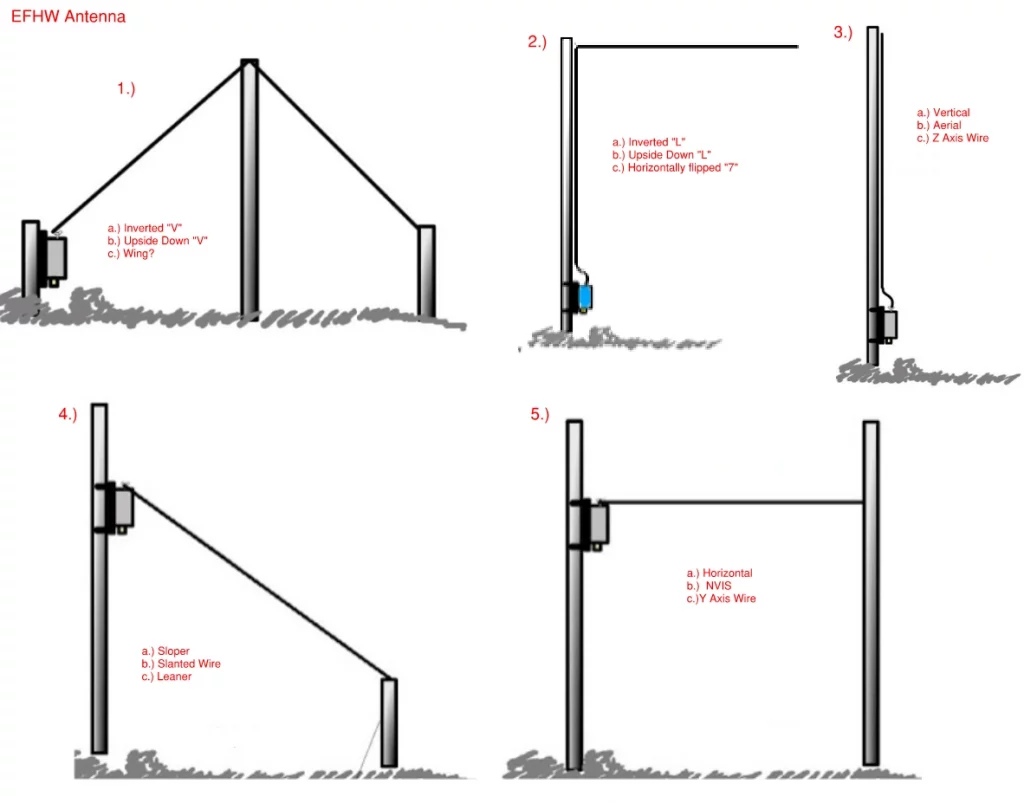
Wire antennas are a popular choice for many ham radio operators. They offer simplicity and good performance at a low cost. Wire antennas can be easily set up in many locations, making them flexible for different environments. They come in various designs to suit different frequency bands and operating styles. Understanding the types of wire antennas helps operators pick the best option for their needs.
Dipoles And Doublets
Dipoles are the simplest form of wire antennas. They consist of two equal-length wires stretched in a straight line. Doublets are similar but often fed at the center with balanced line. Both types work well on specific bands when cut to the right length. They provide a good balance of gain and directivity. These antennas are easy to build and tune.
Multi-band Wire Designs
Multi-band wire antennas allow operation on several frequency bands. They use traps or carefully chosen lengths to cover multiple bands. This design saves space and reduces the need for multiple antennas. Operators can switch bands without changing the antenna. Common examples include fan dipoles and off-center fed dipoles. These antennas suit hams with limited space.
Ladder Line Feed Advantages
Ladder line is a type of balanced feed line used with wire antennas. It has low loss compared to coaxial cable, especially at high SWR. Ladder line helps maintain antenna efficiency over a wide frequency range. It allows the use of multi-band antennas without significant signal loss. Using ladder line often requires a tuner at the radio end. This feed method improves overall system performance.
Vertical Antennas
Vertical antennas are popular among ham radio operators for their simple design and effective performance. They stand upright and radiate radio waves in all directions. This makes them great for local and long-distance communication. Vertical antennas require less space than other types, making them ideal for many setups.
Full-size Verticals
Full-size vertical antennas match the length of the radio wave they send. This size helps them work efficiently and reach farther. They usually need a clear, open space to stand tall. These antennas are common for base stations and provide strong signals on many bands.
Portable Vertical Models
Portable vertical antennas are smaller and easy to carry. They are perfect for field use and emergency communication. These models often come with quick setup features. Despite their size, they can still send and receive signals well, making them popular among outdoor operators.
Radial Systems
Radial systems are key parts of many vertical antennas. They consist of wires laid out on or under the ground. Radials help improve antenna performance by providing a good ground plane. More radials usually mean better signal strength and clearer communication.
Loop Antennas
Loop antennas stand out for their compact design and unique operation. These antennas use a loop of wire or tubing to transmit and receive radio signals. They suit many ham radio setups, especially where space is limited. Their design differs from traditional dipoles or vertical antennas, offering distinct advantages and challenges.
Magnetic Loop Basics
Magnetic loop antennas use a small loop of conductor, often copper tubing. They focus on magnetic fields rather than electric fields. This focus allows them to work well in tight spaces. The loop is usually tuned with a capacitor to match the frequency. They are most common for lower power transmissions. Users often build or buy them for portable or indoor use.
Benefits For Qrp Operators
QRP operators, who use low power, benefit from loop antennas. Loops provide good efficiency despite their small size. They reduce noise from nearby electrical sources. This makes weak signals clearer and easier to hear. Their size allows easy setup in limited areas. The tuning feature helps optimize performance on different bands.
Narrow Bandwidth Considerations
Loop antennas have a narrow bandwidth, meaning they work best on a small frequency range. This requires careful tuning when changing frequencies. Small changes can detune the antenna and reduce signal quality. Operators must adjust capacitors often for the best results. The narrow bandwidth limits quick band changes but improves signal focus. Understanding this helps users get the most from their loops.
Directional Antennas
Directional antennas focus radio signals in a specific direction. This improves signal strength and reception. They help operators connect over longer distances. Directional antennas reduce interference from unwanted signals.
These antennas use multiple elements to direct radio waves. They work by reinforcing signals in one direction. This makes them ideal for contesting and DXing (long-distance contacts).
Yagi Antennas
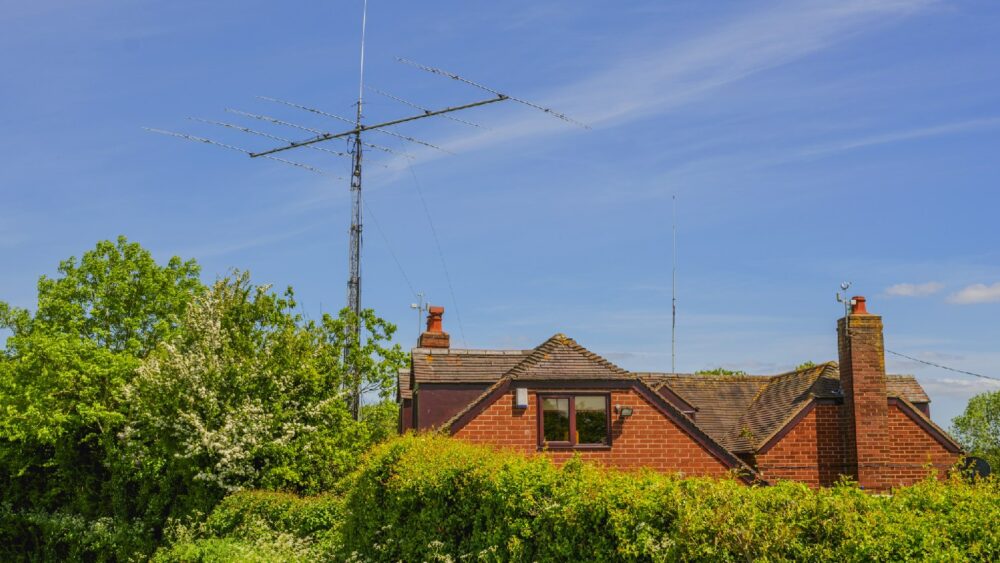
Yagi antennas are the most common directional antennas. They consist of a driven element, reflector, and several directors. The driven element connects to the radio. Reflectors and directors focus the signal forward.
Yagi antennas offer high gain and good front-to-back ratio. This means strong signals in one direction and reduced signals behind. They are popular for HF and VHF bands. Their simple design makes them easy to build or buy.
Log Periodic Arrays
Log periodic arrays cover a wide range of frequencies. They look similar to Yagi antennas but have elements of different lengths. This allows them to work well on many bands.
These antennas have moderate gain and broad bandwidth. They provide steady performance across many frequencies. Log periodic arrays are useful for operators who need multi-band coverage without changing antennas.
Beam Antenna Uses
Beam antennas target signals in one direction. This reduces noise and interference from other sources. They help improve signal clarity and strength.
Operators use beam antennas for long-distance contacts and contests. They allow precise aiming to reach specific stations. Beam antennas also help in emergency communications by focusing on needed areas.
Portable Antennas
Portable antennas play a vital role in ham radio operations outside fixed locations. These antennas are light, easy to carry, and quick to set up. They suit field days, emergency communications, and casual outdoor use. Portable antennas balance performance with convenience, making ham radio accessible almost anywhere.
Hextenna And Alpha Antenna
The HexTenna offers a compact design that fits into a small bag. It uses hexagonal elements to provide good signal gain. This antenna works well for HF bands and is popular with portable operators.
The Alpha Antenna is another favorite for portability. It is lightweight and folds down easily. Its design supports multiple bands, giving flexibility on different frequencies. Both antennas deliver reliable performance without heavy setup.
Telescopic And Collapsible Types
Telescopic antennas extend and retract with simple sliding sections. They save space and pack small for travel. Collapsible antennas break down into shorter parts for easy transport. Both types allow quick adjustments in length for tuning. These antennas suit hikers and emergency kits due to their compactness.
Quick Deployment Tips
Choose a flat, open area for better signal range. Use lightweight ropes or straps to secure the antenna. Carry tools like a small wrench or pliers for fast assembly. Practice setting up at home to reduce time in the field. Keep antenna parts organized in labeled bags for easy access.
Efficiency Factors
Efficiency plays a crucial role in the performance of ham radio antennas. It determines how well the antenna converts radio waves into electrical signals and vice versa. Several factors affect antenna efficiency. Understanding these helps you choose and set up antennas for better communication.
Antenna Size And Resonance
The size of an antenna must match the wavelength it is designed for. A resonant antenna length improves signal strength and reduces energy loss. Short antennas often lose efficiency because they cannot store energy well. Properly sized antennas ensure maximum energy transfer and better reception.
Feedline Losses
Feedlines carry signals from the antenna to the radio. Poor quality or long feedlines cause signal loss. Using low-loss coaxial cables or balanced lines reduces this problem. Keeping feedlines short and well-maintained helps maintain signal strength and overall system efficiency.
Placement And Height
Where you place your antenna impacts its efficiency. Higher placement often means fewer obstructions and better signal reach. Avoid placing antennas near metal objects or buildings that block signals. Clear surroundings and adequate height improve reception and transmission quality.
Common Myths
Ham radio antennas spark many myths and misunderstandings. These myths can confuse beginners and slow learning. Clearing up common myths helps you choose and use antennas better. Let’s explore two widespread myths about ham radio antennas.
Resonance Misconceptions
Many believe antennas must be perfectly resonant to work well. Resonance means the antenna’s length matches the signal’s wavelength. While resonance improves signal strength, non-resonant antennas can still perform well with proper tuning. Antennas connected to tuners or used with matching devices often operate efficiently despite not being exactly resonant.
Ignoring resonance can limit antenna options. Some operators think only resonant antennas transmit clearly. This is not true. You can adjust antennas or use tuners to handle a range of frequencies. Resonance helps but is not the only key for good reception or transmission.
Efficiency Vs. Antenna Type
Efficiency depends more on antenna design and installation than just type. Some assume larger or complex antennas always work better. Simple antennas like dipoles or verticals can be very efficient when installed correctly. Efficiency relates to how well the antenna converts radio waves into signals and vice versa.
Ground quality, height above ground, and surrounding objects impact efficiency greatly. A well-placed simple antenna often outperforms a poorly installed fancy one. Choosing an antenna type should consider your space, frequency, and goals, not just myths about efficiency.
Frequently Asked Questions
What Is The 3 3 3 Rule For Ham Radio?
The 3-3-3 rule for ham radio means transmitting for 3 minutes every 3 hours, repeated 3 times. It conserves battery and maintains communication during emergencies.
What Is The Most Efficient Ham Radio Antenna?
The most efficient ham radio antennas are full-size wire types like dipoles and doublets. They minimize losses when resonant and fed with balanced line. For portability, Alpha HexTenna and POTA Performer Vertical perform well. Magnetic Loop antennas offer high efficiency in compact spaces for low-power use.
What’s Better, 1/4 Wave Or 1/2 Wave Antenna?
A 1/2 wave antenna generally offers better efficiency and gain than a 1/4 wave antenna. It provides improved radiation patterns and reduced ground losses. However, 1/4 wave antennas are more compact and easier to install. Choose based on your space and performance needs.
What Are The Different Types Of Radio Antennas?
Common radio antenna types include dipole, vertical, loop, Yagi, and magnetic loop antennas. Each offers unique range and directionality benefits.
Conclusion
Ham radio antennas come in many types, each with unique features. Choosing the right antenna depends on your needs and space. Simple wire antennas work well for most beginners. Vertical and loop antennas suit smaller areas and portable use. Understanding antenna types helps improve your radio signals.
Experimenting can lead to better communication experiences. Keep learning and adjusting for best results. Your ham radio setup can grow with your skills. Enjoy exploring the world of ham radio antennas!