
If you want to enjoy clear, strong FM radio signals, choosing the right antenna is key. But with so many types of FM radio antennas available, how do you know which one fits your needs?
Whether you’re tuning in from a city apartment or a rural home far from broadcast towers, the antenna you pick can make all the difference in sound quality and reception. You’ll discover the main types of FM radio antennas, how they work, and which one suits your location and listening habits best.
By the end, you’ll feel confident selecting the perfect antenna to transform your radio experience. Keep reading to unlock the secrets behind FM antennas and boost your signal like a pro.

Dipole Antennas
Dipole antennas rank among the simplest and most popular FM radio antennas. Their straightforward design offers reliable signal reception for many FM radio users. These antennas operate efficiently by capturing radio waves with two equal-length conductive elements.
Dipole antennas adapt well to various environments. Their size and shape make them versatile for both indoor and outdoor setups. Many people choose dipole antennas for clear, consistent FM radio signals.
Basic Design
A dipole antenna consists of two metal rods or wires. Each rod is about a quarter of the FM wavelength. Together, these rods form a half-wave antenna. This design helps pick up FM radio signals effectively. The antenna connects to the radio receiver at the center point.
Indoor Use
Indoor dipole antennas are compact and easy to install. They often come with a simple wire or rod form. These antennas work best near a window or open space. Indoor dipole antennas improve FM reception without complex setup. They suit apartments and homes with limited outdoor space.
Outdoor Variants
Outdoor dipole antennas are larger and more durable. They use weather-resistant materials to handle wind and rain. These antennas mount on rooftops or poles for better signal reception. Outdoor versions cover greater distances and reduce interference. They are ideal for rural or weak signal areas.
Monopole Antennas
Monopole antennas form a basic yet vital category of FM radio antennas. They consist of a single rod or conductor that transmits and receives radio waves efficiently. Their simple design makes them widely used in various FM radio setups.
Structure And Function
A monopole antenna usually stands vertically over a conductive surface, called a ground plane. The length of the rod is typically a quarter of the radio wave’s wavelength. This size helps the antenna send and pick up signals clearly. The ground plane reflects signals, boosting the antenna’s performance. Monopole antennas send signals in almost all horizontal directions, making them omnidirectional.
Common Applications
Monopole antennas appear in many FM radio systems. They are common on car radios because of their compact size. Many portable FM radios use monopole antennas inside to keep the device small. FM broadcasting stations use larger monopole antennas mounted on towers. They provide reliable coverage over wide areas. Their ease of installation and good performance make them a popular choice for various FM radio needs.
Loop Antennas
Loop antennas form a unique category of FM radio antennas. They use a coil of wire shaped into a loop to catch radio signals. These antennas are popular for their compact size and ease of installation. Many users choose loop antennas for indoor or limited space setups. Their design helps reduce interference and improve signal clarity.
Types Of Loops
There are two main types of loop antennas. The first is the small loop, which is compact and portable. It works well for receiving local FM stations. The second type is the large loop, often used outdoors. Large loops provide stronger signal reception over greater distances. Both types come in single-turn or multi-turn designs. Multi-turn loops capture more signal but may pick up more noise.
Signal Reception Benefits
Loop antennas offer clear and stable FM signal reception. Their design reduces noise from electrical devices and interference. They also have a directional property, which means they can be turned to find the strongest signal. This helps avoid unwanted signals from other directions. Loop antennas work well in urban areas with many signal sources. Users enjoy better sound quality and fewer dropouts using these antennas.
Directional Antennas
Directional antennas focus the radio signal in a specific direction. They help improve signal strength and reduce interference from other directions. This focus makes them ideal for long-distance FM radio reception. Several types of directional antennas exist, each with unique designs and benefits.
Yagi Antennas
Yagi antennas are popular directional antennas for FM radio. They consist of multiple elements arranged in a line. One element acts as the driven element, while others serve as reflectors and directors. This design directs the signal to a narrow beam, increasing gain. Yagi antennas are easy to build and cost-effective. They work well in urban and rural areas.
Logarithmic Antennas
Logarithmic antennas have a wide frequency range. They use a design with many elements that gradually increase in size. This structure allows them to receive signals from a broad spectrum. Their directional nature helps reduce noise and interference. Logarithmic antennas offer better performance for FM radio in complex environments. They are often used in professional and hobbyist setups.
Benefits For Long Distance
Directional antennas provide stronger signals over long distances. They help capture weak FM signals that omnidirectional antennas miss. By focusing the reception, they reduce background noise. This leads to clearer sound and fewer dropouts. Directional antennas are essential for rural or fringe areas. They improve the overall listening experience for FM radio users.
Omnidirectional Antennas
Omnidirectional antennas send and receive signals in all directions. They have a simple design that radiates signals evenly around the antenna. This makes them popular for FM radio stations and receivers. Their ability to cover a full 360-degree area allows consistent reception without needing to aim the antenna.
These antennas work well in areas where signals come from different directions. They offer a stable signal for both urban and rural environments. Omnidirectional antennas also handle interference better by capturing signals from multiple sources.
Coverage Area
Omnidirectional antennas cover a wide circular area around their location. They do not focus the signal in one direction. This means the broadcast or reception spreads evenly across the surroundings. The coverage radius depends on antenna height and power. Placing the antenna higher increases the range and quality of the signal.
Because of their wide coverage, these antennas work well in cities with many signal sources. They also perform well in open spaces where signals come from many angles. This broad coverage helps avoid dead zones and weak signal spots.
When To Use
Use omnidirectional antennas when you need uniform coverage in all directions. They suit FM radio stations serving local communities. These antennas help in mobile settings, such as vehicles or handheld radios.
They are ideal for locations with many signal sources around. When the signal direction is unclear, omnidirectional antennas provide reliable reception. They also work well for general listening without needing to adjust the antenna.

Circularly Polarized Antennas
Circularly polarized antennas are a unique type of FM radio antenna. They send and receive radio waves that rotate in a circular motion. This rotation can be clockwise or counterclockwise. Many FM stations and receivers use this type of antenna to improve signal quality.
This kind of antenna works well in areas with many obstacles. It reduces signal loss caused by reflections from buildings, trees, or hills. Circular polarization helps maintain a steady connection and clearer sound.
Polarization Explained
Polarization describes the direction of the radio wave’s electric field. Most antennas use linear polarization, where waves move in one direction. Circular polarization means the wave rotates as it moves forward. This rotation can be right-handed or left-handed. It allows the antenna to catch signals from different angles. This feature makes it useful in complex environments.
Advantages In Reception
Circularly polarized antennas offer better signal stability. They reduce the effects of multipath interference. This happens when signals bounce off surfaces and arrive at the antenna at different times. The circular motion helps the antenna pick up more consistent signals. It also improves reception in moving vehicles. These antennas can receive signals from both horizontal and vertical orientations. This flexibility leads to clearer audio and fewer dropouts.
Broadband And Tuned Antennas
Broadband and tuned antennas serve distinct roles in FM radio reception. Both types help capture radio signals but differ in design and function. Understanding their features helps in choosing the right antenna for your needs.
Frequency Range
Broadband antennas cover a wide range of frequencies. They work well across the entire FM band without needing adjustments. Tuned antennas focus on a narrow frequency range. They are designed to pick up specific stations with better clarity. This focus helps reduce interference from other signals.
Application Scenarios
Broadband antennas fit environments with many stations. They suit users who want to listen to various channels without changing antennas. Tuned antennas work best for fixed locations. They perform well when you want to receive a strong signal from one or two stations. Both antenna types enhance FM radio listening in different ways.
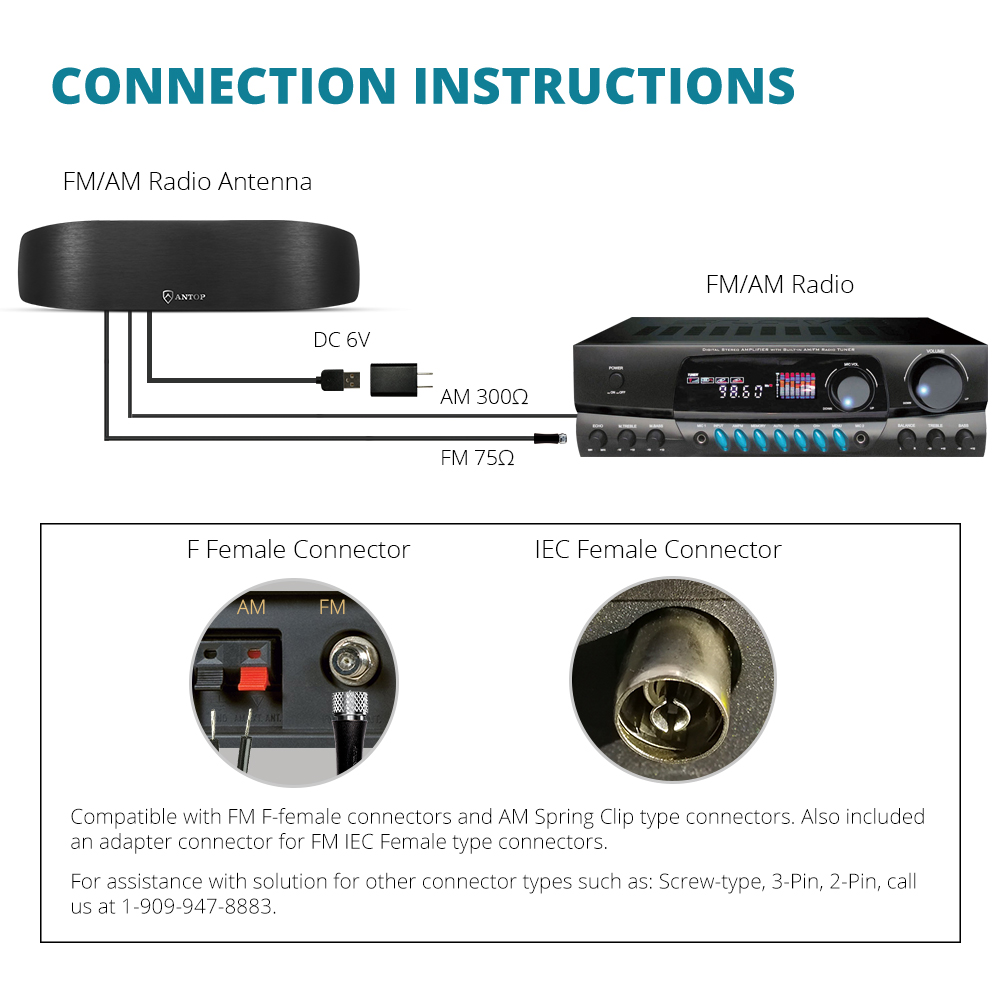
Indoor Vs Outdoor Antennas
Choosing between indoor and outdoor FM radio antennas depends on your needs and environment. Each type offers unique benefits and challenges. Understanding these differences helps you pick the right antenna for clear, strong radio signals.
Performance Differences
Outdoor antennas usually capture signals better than indoor ones. They stand higher and face fewer obstacles like walls. This height and clear path improve reception quality and reduce interference.
Indoor antennas are easier to use but may receive weaker signals. Thick walls or electronic devices can block or weaken radio waves. Still, indoor antennas work well in areas near radio towers.
Installation Tips
Installing outdoor antennas requires more effort. Find a high, open spot like a rooftop or a tall pole. Secure the antenna firmly to withstand wind and weather.
Indoor antennas are simpler to install. Place them near windows or higher walls for better reception. Avoid placing antennas near metal objects or appliances that cause interference.
Amplified Antennas
Amplified antennas are designed to boost weak FM radio signals. They include a built-in amplifier that strengthens the signal before it reaches the radio receiver. This boost helps reduce static and improve sound clarity. Amplified antennas are popular for indoor use and areas with weak signal coverage.
How Amplification Works
The amplifier inside the antenna increases signal strength. It captures weak radio waves and makes them stronger. This process helps the radio receive clearer signals. The amplifier needs power, usually from the radio or an external source. Amplification reduces noise and improves reception quality.
Best Use Cases
Amplified antennas work well in places with weak FM signals. They are ideal for indoor locations like apartments or offices. These antennas help improve reception in buildings with thick walls. They are also useful in rural areas far from radio towers. Amplified antennas are great for users who want better sound without outdoor installation.
Choosing The Right Antenna
Choosing the right FM radio antenna is key for clear sound. The right antenna depends on your location and signal needs. Understanding three main factors helps pick the best antenna.
Distance To Transmitter
Distance affects the antenna type you need. For short distances, a simple indoor antenna can work well. For long distances, an outdoor antenna with higher gain is better. Stronger antennas capture weak signals from far transmitters.
Station Direction
Directional antennas focus on signals from one direction. Use these if stations are in a specific area. Omnidirectional antennas receive signals from all directions. Choose based on how stations are spread around you.
Location And Height
Height improves signal reception. Place antennas high and free from obstructions. Outdoor antennas perform best on rooftops or tall poles. Indoor antennas work better near windows or away from metal objects.
Frequently Asked Questions
What Are The Different Types Of Antennas For Fm Radio?
Common FM radio antennas include dipole, monopole, loop, Yagi, omnidirectional, and directional types. Each suits different signal needs.
What Are The Different Types Of Radio Antennas?
Radio antennas include dipole, monopole, loop, Yagi, parabolic dish, omnidirectional, and directional types. Each suits specific frequencies and uses.
Which Antenna Is Best For Fm Radio Reception?
A dipole antenna suits strong local FM signals. For weak or distant stations, use a high-gain outdoor directional Yagi antenna. Omnidirectional antennas work well when receiving signals from multiple directions. Mount outdoor antennas high for better reception.
What Are The Three Basic Types Of Antennas?
The three basic types of antennas are dipole, monopole, and loop antennas. Each serves different frequency and coverage needs.
Conclusion
Choosing the right FM radio antenna depends on your signal needs and location. Different types offer unique benefits and coverage areas. Simple antennas work well indoors, while directional ones suit outdoor use. Understanding antenna types helps improve your radio listening experience.
Try selecting the best antenna for clearer, stronger FM reception. Keep exploring to find what fits your setup and enjoy better sound quality.