
For a 75-inch TV, a stand that’s at least 68–72 inches wide is the safest and best-looking fit, even though the screen itself is usually around 66 inches wide. Extra width helps prevent tipping, gives room for a soundbar, and keeps the TV from feeling cramped. Also check the stand’s weight rating, the depth of your TV’s feet, and whether the center base will sit fully on the top surface without overhang.
Tv Width And Stand Size
Choosing the right TV stand size is essential for your 75 inch TV. The width of your TV directly impacts the size of the stand you need. A stand too small can cause instability. A stand too large might take up unnecessary space. Understanding the relationship between TV width and stand size helps you pick the best fit for your room.
Minimum Stand Width For 75 Inch Tv
A 75 inch TV usually measures about 65.4 inches wide. The stand should be at least this wide. This minimum width prevents the TV from hanging over the edges. It also ensures the TV sits securely without tipping risks. Choose a stand that matches or slightly exceeds 65.4 inches in width.
Recommended Stand Width For Stability
For better stability, aim for a stand 5 to 10 inches wider than the TV width. That means a stand around 70 to 75 inches wide works well. This extra width balances the TV’s weight. It also offers space for other devices like speakers or gaming consoles. A wider stand reduces wobble and increases safety.
Leg Placement And Stand Edges
Check your TV’s leg placement before buying a stand. Some 75 inch TVs have legs near the edges. Others have legs closer together in the center. The stand must support the legs fully. Avoid stands with edges that leave legs hanging over. Proper leg support prevents damage and keeps your TV stable.
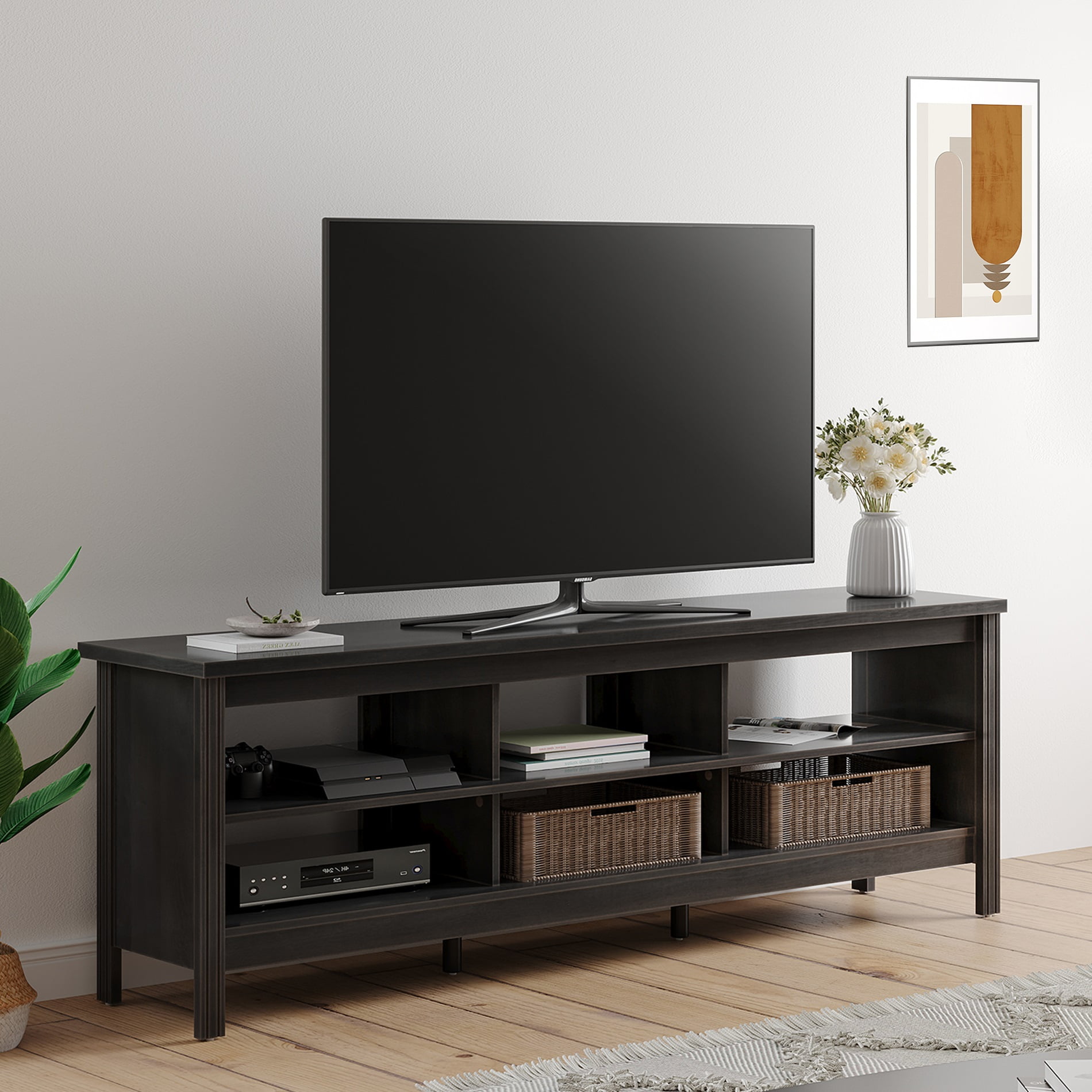
Credit: www.walmart.com
Height Considerations
Choosing the right height for your TV stand is crucial for a comfortable viewing experience. The height affects how you see the screen and how much strain your neck feels. Proper height lets you enjoy your 75 inch TV without discomfort or awkward angles.
Consider how high the stand places the TV screen and how you usually sit. The goal is to have the screen at a natural eye level. This keeps your posture correct and your viewing clear.
Ideal Viewing Height
The top of the TV screen should be at or just below your eye level. This helps avoid neck strain during long viewing sessions. For most people seated on a sofa, eye level is about 40 to 42 inches from the floor. Measure your sitting height to find your exact eye level. Adjust the stand height so the center of the TV screen matches this level.
Matching Stand Height To Seating Position
Check the height of your seating before picking a stand. Sofas and chairs vary in height, which changes your eye level. If your seat is low, choose a lower stand. Taller seats need higher stands. This match keeps your line of sight straight and comfortable. Also, consider the TV’s base or legs height. Add this to the stand height to get the total viewing height.
Depth And Support
Choosing the right depth and support for a TV stand is crucial for your 75 inch TV. The stand must be deep enough to hold the TV base securely. It also needs to allow room for cables and proper ventilation. Without enough depth, the TV might not sit safely or cables could get cramped. Support means the stand must handle the TV’s weight without wobbling or tipping.
Stand Depth For Tv Base
The TV base size matters for stand depth. Measure your 75 inch TV’s base width and depth. The stand should be slightly deeper than the TV base. This prevents the TV from hanging over the edges. A depth of 15 to 20 inches usually works well for most 75 inch TVs. This depth ensures the TV stays stable and balanced on the stand.
Space For Cables And Ventilation
Leave extra space behind the TV for cables. This space avoids bending or pinching wires, which can damage them. Also, good ventilation stops the TV from overheating. Heat builds up at the back of the TV. A stand with open space or vents keeps air flowing around your TV. About 3 to 5 inches of clearance behind the TV is ideal for cables and airflow.
Weight Capacity And Materials
Choosing the right TV stand for your 75-inch TV requires attention to weight capacity and materials. These factors ensure your TV stays secure and stable. The stand must hold the TV’s weight without bending or breaking. Also, the materials affect the stand’s durability and style.
Checking Stand Weight Limits
Every TV stand has a maximum weight limit. Check this limit before buying. Your 75-inch TV can weigh between 70 to 90 pounds, depending on the model. The stand should support at least this weight plus extra for safety. A stand with a higher weight capacity provides better stability. Never use a stand that is rated below your TV’s weight. This prevents accidents and damage.
Material Strength And Durability
Strong materials make the TV stand last longer. Common materials include wood, metal, and glass. Solid wood offers good support and a classic look. Metal stands are sturdy and modern but can be heavier. Glass stands look sleek but may be less durable under heavy weight. Choose materials that handle your TV’s weight well. Also, consider the stand’s construction quality. Well-built joints and supports add extra strength.
Style And Design Factors
Choosing the right TV stand for a 75 inch TV involves more than just size. Style and design play a key role in creating a balanced look in your room. The stand should fit well with your decor and offer the features you need. A well-chosen stand enhances your space and supports your TV safely.
Matching Stand To Room Decor
Pick a TV stand that matches your room’s style. For modern rooms, sleek and simple designs work best. Classic rooms look great with wooden stands that have detailed finishes. Neutral colors blend well with most decor styles. Consider the room’s color scheme and furniture style. The stand should feel like a natural part of the room, not an afterthought.
Size and shape matter too. A wide, low stand suits large living rooms. Tall and narrow stands fit better in smaller spaces. Think about the material too. Metal and glass add a contemporary touch. Wood gives warmth and a cozy feel. Choose a design that makes your TV the focal point without overwhelming the room.
Storage And Functionality Options
Storage is important for keeping your space tidy. Look for stands with shelves, drawers, or cabinets. These help organize devices, remotes, and cables. Open shelves offer easy access to gadgets. Closed cabinets hide clutter and protect items from dust. Some stands include built-in cable management to keep wires neat.
Functionality should match your needs. If you have a gaming console, choose a stand with enough space and ventilation. For sound systems, consider stands with extra room for speakers. Adjustable shelves add flexibility for different items. A sturdy surface is essential to support the weight of a 75 inch TV safely.
Measuring Your Space
Measuring your space is the first step to choosing the right TV stand for your 75 inch TV. Accurate measurements help you find a stand that fits well and looks balanced. You avoid buying a stand that is too big or too small. Take your time to measure carefully and note the dimensions of your room and available area.
Available Floor Space
Start by measuring the floor space where you want the TV stand. Use a tape measure to get the width, depth, and height. Make sure there is enough room for the stand and other furniture. Leave some space around the stand for easy movement. Consider the shape of the room and any corners or walls nearby.
For a 75 inch TV, the stand should be at least 65 inches wide. This size supports the TV base and keeps the look balanced. Also, check the depth to fit the TV base and cables. A deeper stand can hold media devices and speakers.
Clearance Around Tv Stand
Clearance means the free space around your TV stand. It is important for safety and comfort. Keep some space between the stand and walls or furniture. This space helps with air circulation and prevents overheating of electronics.
Make sure the TV stand is not blocking doors or walkways. Leave at least 6 to 12 inches of clearance on each side of the stand. This space also makes cleaning easier. Proper clearance improves the room’s flow and your viewing comfort.
Mounting Alternatives
Choosing how to place your 75 inch TV is important for both style and safety. You can either mount it on the wall or place it on a stand. Each option changes the space and look of your room. Knowing the alternatives helps you decide what fits your home best.
Wall Mounting Vs Stand Placement
Wall mounting saves floor space and gives a clean, modern look. It keeps the TV at eye level and reduces clutter. You must ensure the wall can support the TV’s weight. Also, cables need to be managed neatly.
Stand placement offers more flexibility in moving the TV. You can choose a stand that matches your room’s decor. The stand must be wide enough to hold your 75 inch TV safely. It should support the TV’s weight and have room for legs.
Hybrid Options For Flexibility
Hybrid mounts combine wall mounting with a stand base. These allow the TV to tilt or swivel for better viewing angles. You can adjust height and position easily. Hybrid options suit rooms where you want both stability and movement.
They also provide extra storage space under the TV. This helps keep media devices and accessories organized. Hybrid mounts work well if you want a balance between style and function.

Credit: www.amazon.sg
Conclusion
Choosing the right TV stand size matters for both safety and style. A 75-inch TV usually fits best on a stand at least 65 inches wide. This size ensures your TV legs sit fully on the stand without hanging over.
Don’t forget to check the stand’s weight limit to keep your TV secure. Also, consider the height and depth for proper viewing and space for cables. Picking the right stand helps your TV look great and stay stable in your room.