
If you’ve ever been curious about ham radios, you’re in the right place. Understanding the different types of ham radios can open up a whole new world of communication for you—whether it’s for hobby, emergency preparedness, or just connecting with others far and wide.
But with so many options out there, how do you know which type fits your needs? This guide will break down the main types of ham radios, explaining how each works and what makes them unique. By the end, you’ll have a clear picture to help you choose the right radio that matches your goals and lifestyle.
Ready to discover your perfect ham radio? Let’s dive in.
Handheld Radios
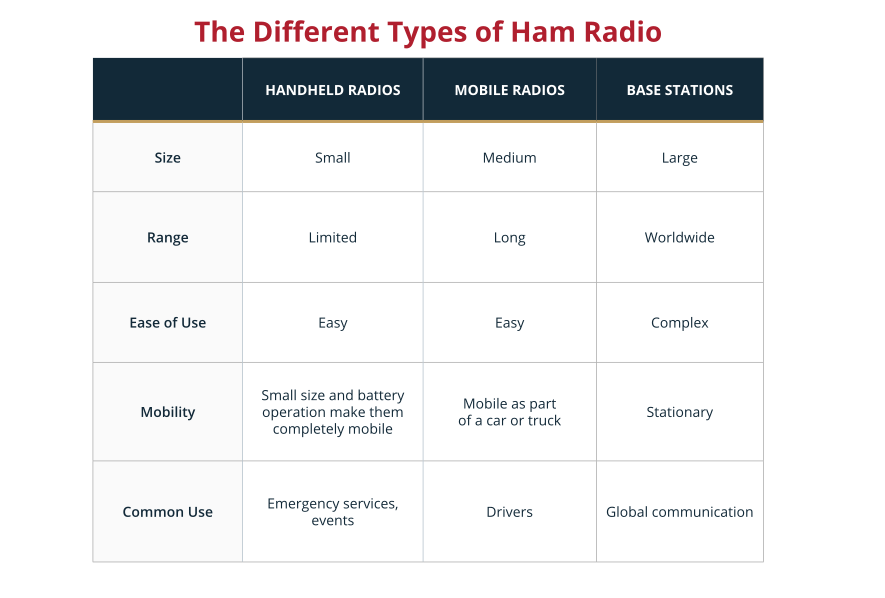
Handheld radios, often called HTs (handie-talkies), are compact devices used by amateur radio enthusiasts. They fit easily in your hand and pocket. These radios offer great flexibility for communication on the go. Their small size makes them popular for outdoor activities, emergencies, and casual chatting.
Many beginners and experienced users enjoy handheld radios because they provide instant access to local ham radio networks. They work on various frequencies and can connect with repeaters to extend range. Handheld radios are a practical choice for those who want reliable communication without bulky equipment.
Features And Uses
Handheld radios include features like adjustable power levels and multiple channels. They often have a built-in antenna and a simple display for easy operation. Some models support dual-band frequencies, allowing users to switch between two bands quickly.
These radios work well for hiking, camping, and neighborhood communication. They can also be used during disasters when other communication methods fail. Handheld radios help keep groups connected, even in remote locations.
Battery Life And Portability
Battery life varies, but many handheld radios last several hours on a full charge. Some use rechargeable batteries, while others use replaceable AA or AAA cells. Lightweight design makes them easy to carry all day.
Portability is a key advantage. You can clip a handheld radio to your belt or carry it in a small bag. This convenience means you can stay in touch without carrying heavy equipment or extra gear.
Mobile Radios
Mobile radios are a vital part of ham radio setups. These radios install in vehicles or portable stations. They offer more power and range than handheld radios. Mobile radios connect to vehicle batteries or external power sources. They allow communication on the move or from fixed locations.
Installation And Power
Installing mobile radios requires space in the vehicle dashboard or trunk. Antennas mount on the roof, trunk, or bumper. Power usually comes from the vehicle’s 12-volt battery. Proper wiring ensures stable power and protects the vehicle’s electrical system. Some radios include mounting brackets and wiring kits for easy setup.
Typical Applications
Mobile radios suit emergency responders, truckers, and outdoor enthusiasts. They help with long-distance communication on highways or remote areas. Many use them for event coordination, search and rescue, or hobby contacts. Mobile radios provide reliable, clear signals on multiple bands and frequencies.
Base Station Radios
Base station radios serve as the heart of many ham radio setups. They are designed to stay in one location, often in a home or a dedicated radio room. These radios provide powerful transmission and clear reception. They support extended conversations and can connect with distant stations worldwide. Their durability and features make them popular among serious ham radio enthusiasts.
Power And Range
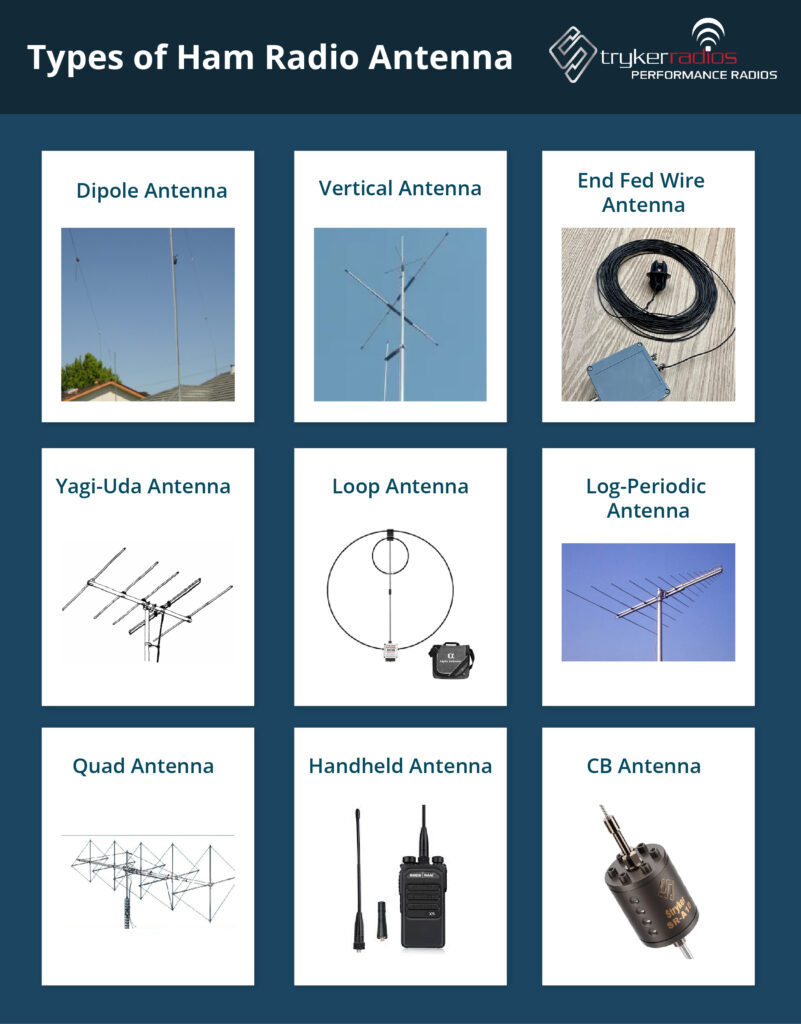
Base station radios usually offer higher power levels than portable radios. This power boosts signal strength for longer distances. Many models operate at 100 watts or more. Stronger signals mean clearer communication over vast areas. Range depends on antenna quality, terrain, and atmospheric conditions. A good antenna enhances both sending and receiving capabilities. This setup allows users to reach stations across cities, states, or even countries.
Setup Requirements
Setting up a base station radio needs more space than handhelds. Users must install a proper antenna, often on a roof or tower. Power supply is important; most base stations require a stable 12V or AC source. Some radios have cooling fans to handle heat during long use. Proper grounding protects the equipment and improves signal quality. Users may also need coaxial cables and connectors. Planning and patience help ensure a reliable and effective setup.
Manpack Radios
Manpack radios are portable communication devices designed for easy carrying and reliable use in the field. They combine the power of base radios with the convenience of a backpack format. These radios suit military, emergency responders, and outdoor enthusiasts who need clear communication on the move.
Portability And Power Balance
Manpack radios offer a smart balance between size and power. They are light enough to carry for long periods. Yet, they provide stronger signals than handheld radios. The design focuses on comfort and quick access to controls. Battery life supports extended use without heavy recharging. This balance makes manpack radios ideal for mobile operations.
Field Operation Benefits
Using manpack radios in the field improves teamwork and safety. They maintain strong connections in rough terrain or dense forests. The radios support multiple channels and encryption options. Users can switch frequencies to avoid interference. Their rugged build resists weather and drops. This durability ensures reliable communication in harsh conditions.
Qrp Radios
QRP radios are a unique type of ham radio designed for low power use. These radios typically transmit at 5 watts or less. Many operators enjoy QRP for its simplicity and challenge. QRP radios are small and portable. They often run on batteries, making them great for field use. This type of radio appeals to those who like efficient, minimal setups. QRP operation requires skill to make contacts with limited power. It emphasizes quality over quantity in radio communication.
Low Power Operation
QRP radios operate at very low power levels. Most use 5 watts or less to send signals. This low power reduces battery drain and heat. It also means the radio is lightweight and easy to carry. Operators often use simple antennas with QRP radios. Despite low power, QRP can reach great distances. It depends on good conditions and operator skill. Low power helps avoid interference with other devices. Many enjoy the challenge of making contacts with less power.
Challenges And Rewards
Using QRP radios comes with challenges. Signals are weaker and harder to hear. Operators must find quiet places and use good antennas. They often wait for the best time to transmit. Patience and knowledge of radio waves help a lot. The reward is a sense of achievement. Making contact with low power feels very satisfying. QRP operators enjoy the technical skill involved. It also teaches better listening and operating habits. Many find QRP to be a fun and rewarding hobby.
Satellite Radios
Satellite radios offer a unique way to communicate using ham radio equipment. They connect through artificial satellites orbiting Earth. This technology allows operators to reach far beyond the range of typical radios.
Unlike standard ham radios, satellite radios send signals to space. The satellites then relay these signals to other radios on the ground. This method expands communication possibilities for ham radio users.
Communication Via Oscar
OSCAR stands for Orbiting Satellite Carrying Amateur Radio. These satellites are specially built for ham radio use. They help operators communicate over long distances using space relays.
Users send messages to the satellite, which then bounces them back to Earth. This process can link radios thousands of miles apart. OSCAR satellites often support voice, data, and digital modes.
Many ham radio enthusiasts track OSCAR satellites to catch their short communication windows. These satellites move quickly, so timing is key. Operators prepare their gear to connect during these brief passes.
Satellite Coverage
Satellite radios cover large areas of the Earth’s surface. Coverage depends on the satellite’s orbit and type. Some satellites circle the globe rapidly, offering worldwide reach.
Other satellites stay in fixed positions above the equator, providing constant coverage to specific regions. Operators must know the satellite’s position to communicate effectively.
Satellite coverage allows ham radio users to talk across continents. It breaks the limits of line-of-sight radio signals. This feature makes satellite radios a powerful tool for global communication.
Frequency Bands
Ham radios operate on different frequency bands. These bands determine how far and clear your communication can be. Each band suits specific uses, depending on the distance and environment. Understanding frequency bands helps you choose the right ham radio type.
Vhf And Uhf Uses
VHF (Very High Frequency) and UHF (Ultra High Frequency) bands are common in ham radios. VHF covers 30 MHz to 300 MHz, while UHF ranges from 300 MHz to 3 GHz. These bands work best for short to medium distances.
VHF signals travel well outdoors and through obstacles like buildings and trees. They are popular for local communication, public safety, and emergency services. Many handheld ham radios use VHF frequencies for clear voice contact.
UHF signals penetrate dense areas better than VHF. They are ideal for urban environments and indoor use. UHF radios are common for talking inside buildings or between vehicles in the city. Both bands support simplex and repeater operations.
Hf Band Applications
The HF (High Frequency) band covers 3 MHz to 30 MHz. It allows long-distance communication, even across continents. HF radios use the ionosphere to bounce signals far beyond the horizon.
Ham operators use HF bands for DXing, contesting, and emergency communication worldwide. These frequencies require larger antennas and more power. HF radios are valuable for reaching remote areas without repeaters or satellites.
HF bands also support Morse code and digital modes. These modes can transmit clear messages in poor conditions. Many ham enthusiasts enjoy the challenge of making contacts on HF bands.
Modes Of Operation
Ham radios communicate using various modes of operation. These modes define how signals are sent and received. Understanding these modes helps users choose the right radio for their needs. The two main categories are analog and digital modes. Each offers unique features and advantages.
Analog Modes: Am, Fm, Ssb
Analog modes transmit voice or data as continuous signals. AM (Amplitude Modulation) varies the signal’s amplitude. It is one of the oldest modes and works well for short distances.
FM (Frequency Modulation) changes the signal’s frequency. FM provides clearer audio and less noise. It is common for local communication and repeaters.
SSB (Single Sideband) is a refined form of AM. It uses less power and bandwidth. SSB is popular for long-distance contacts and contesting. It delivers better signal quality over vast distances.
Digital Modes Overview
Digital modes convert voice or data into digital signals. These modes offer higher efficiency and clearer communication. They work well in poor signal conditions.
Popular digital modes include FT8, PSK31, and D-STAR. These modes allow text messaging, file transfers, and even GPS data sharing. Digital modes enhance the capabilities of ham radios. They open new possibilities beyond traditional voice communication.
Repeaters And Range Extension
Repeaters play a crucial role in ham radio by extending the communication range. They receive signals on one frequency and retransmit them on another. This process boosts the signal strength, allowing radios to communicate over greater distances. Repeaters help users connect across hills, buildings, and other obstacles that usually block signals.
Range extension is essential for ham radio operators who want reliable communication in remote or urban areas. By using repeaters, operators can cover wider areas without needing powerful radios or large antennas. This makes ham radio more accessible and practical for daily use and emergencies.
How Repeaters Work
A repeater has two radios: one for receiving and one for transmitting. When a ham radio sends a signal, the repeater picks it up on its receive frequency. It then retransmits the signal on a different frequency with higher power. This helps the original signal travel much farther than it could alone.
Repeaters often use antennas placed high on towers or buildings. This height advantage reduces interference and increases coverage. The repeater also filters out noise, improving the clarity of the communication. Operators only need to tune their radios to the repeater’s transmit frequency to communicate.
Repeater Networks
Many repeaters connect with each other to form large networks. These networks allow communication over vast areas, sometimes spanning entire regions or states. Operators can switch between repeaters to maintain contact as they move.
Some repeater networks link repeaters via the internet or radio links. This setup lets users communicate worldwide using local repeaters. It also supports emergency communication by providing multiple paths for messages.
Repeater networks increase the reliability and reach of ham radio. They create a flexible system that adapts to users’ needs and locations. For many ham radio enthusiasts, repeaters are an essential tool for effective communication.
Transceivers And Components
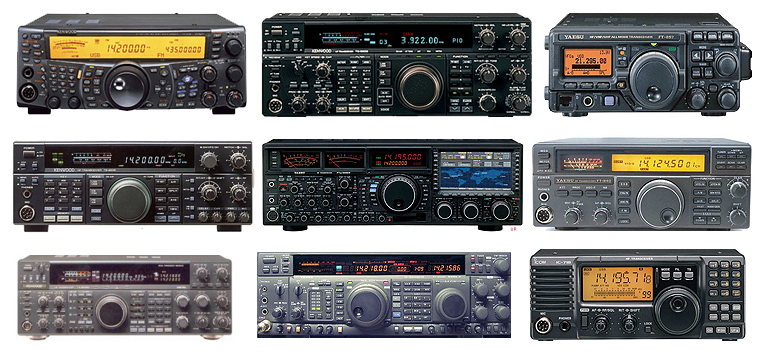
Transceivers and their components form the heart of ham radios. These devices allow users to both transmit and receive signals. Understanding their parts helps users choose the right radio and operate it efficiently.
Each component plays a specific role in communication. Together, they ensure clear and stable signal transmission. Knowing these parts also helps in troubleshooting and upgrades.
Basic Parts
A typical ham radio transceiver includes several key parts. The transmitter sends radio signals out. The receiver captures incoming signals from other radios.
The antenna is crucial for sending and receiving signals. The microphone lets the user speak into the radio. The speaker or headphones output the received sound.
A tuning dial or digital interface helps select frequencies. Power supply provides energy for the radio to function. Some radios also have a display showing frequency and settings.
Integrated Functions
Modern transceivers combine multiple functions into one unit. This integration saves space and improves ease of use. Users can switch between transmitting and receiving without extra equipment.
Many radios include digital signal processing to reduce noise. Some have built-in frequency scanning to find active channels quickly. Others support multiple bands, increasing communication options.
Advanced models offer features like memory channels and automatic gain control. These functions help customize settings and improve signal clarity. Integration makes ham radios more versatile and user-friendly.
Frequently Asked Questions
What Is The 333 Rule For Ham Radio?
The 333 rule in ham radio means listening and transmitting for three minutes every three hours on three different frequencies. It helps conserve battery and coordinate communication during emergencies.
What’s The Difference Between Ft8 And Ft4?
FT8 uses 15-second transmission cycles for weak signals and longer contacts. FT4 is faster with 7. 5-second cycles, ideal for contests and quick exchanges. FT8 excels in low signal conditions; FT4 prioritizes speed and efficiency.
What Does Ht Stand For In Ham Radio?
HT in ham radio stands for “Handy Talkie,” a term for portable handheld transceivers used by amateur radio operators.
What Are The Categories For Ham Radio?
Ham radio categories include Technician, General, and Amateur Extra license classes. Equipment types cover handheld, mobile, and base stations. Frequencies range from VHF/UHF for local use to HF for long-distance communication. Modes include voice, Morse code, and digital data transmission.
Conclusion
Ham radios come in many types, each with unique features. Choose one that fits your needs and budget. Whether for casual chatting or emergency use, a ham radio can connect you worldwide. Learning its basics is simple and rewarding. Start exploring and enjoy the exciting world of ham radio communication.