
Are you ready to take your Rubik’s Cube skills to the next level? Whether you’re a beginner or a seasoned puzzler, exploring different types of Rubik’s Cubes can open up a whole new world of fun and challenge.
From classic designs to mind-bending variations, each cube offers a unique twist that will test your problem-solving abilities in exciting ways. Keep reading to discover 15 different types of Rubik’s Cubes that you can try today—and find out which one might be the perfect fit for your next challenge!
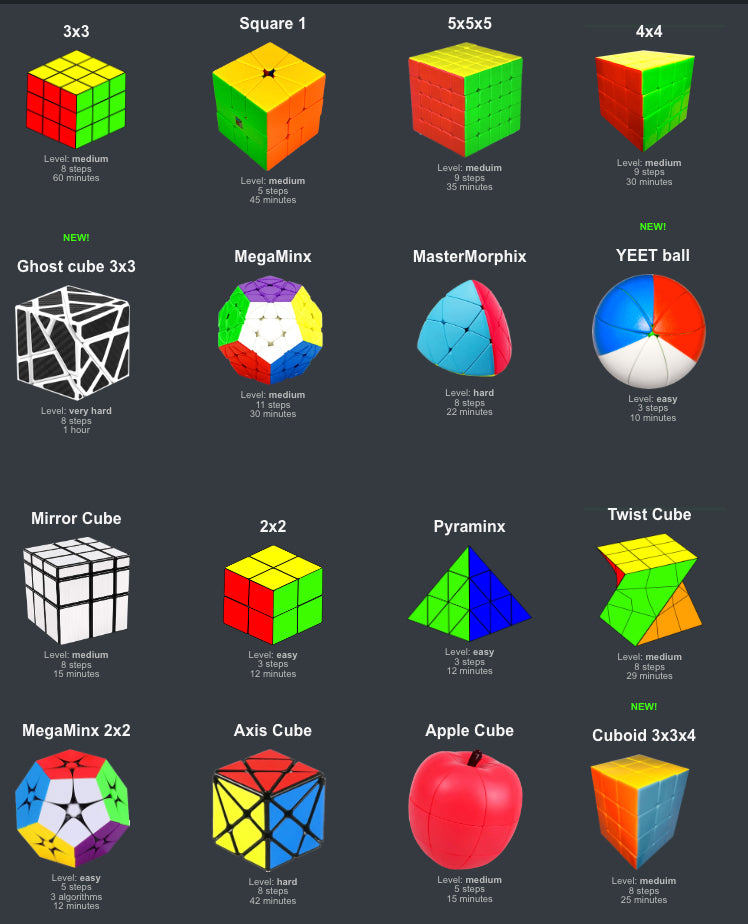
Credit: cubearea.store
Classic 3×3 Cube
The Classic 3×3 Cube is the most popular Rubik’s Cube. It has six faces with nine stickers each. Each face is one solid color when solved. The goal is to twist and turn the cube until each face shows only one color.
Many people start with this cube. It is simple in design but offers many challenges. The 3×3 cube improves problem-solving and hand-eye coordination.
The Design Of The Classic 3×3 Cube
The cube has 26 smaller pieces. These include 8 corner pieces, 12 edge pieces, and 6 center pieces. The center pieces stay in place. They show the color of each face.
How To Solve The Classic 3×3 Cube
Solving the 3×3 involves patterns and sequences. Many beginners use step-by-step methods. These methods break the puzzle into small parts. Each step focuses on solving one layer at a time.
Why The Classic 3×3 Cube Is Popular
This cube is easy to carry and use anywhere. It fits well in your hand. The puzzle offers many ways to solve it. This variety keeps the cube interesting for years.
2×2 Pocket Cube
The 2×2 Pocket Cube is a smaller version of the classic Rubik’s Cube. It has only two rows and two columns on each face. This makes it easier to solve than the original 3×3 cube. Many beginners start with the 2×2 to learn the basics of cube solving.
Despite its simple look, the 2×2 Pocket Cube offers a good challenge. It helps improve finger speed and problem-solving skills. The cube is compact, making it easy to carry anywhere. This is why it is called the “Pocket Cube.”
Design And Structure
The 2×2 Pocket Cube has 8 corner pieces and no edge or center pieces. Each corner has three colored stickers. The cube turns smoothly on all sides. Its compact design fits nicely in the hand for quick moves.
Solving Techniques
Solving the 2×2 uses similar methods as the 3×3 cube. Beginners focus on matching all corners correctly. Advanced solvers use algorithms to solve it in a few moves. The fewer pieces make it faster to learn.
Why Choose The 2×2 Pocket Cube?
This cube is perfect for new cubers. It builds confidence before moving to larger cubes. It also suits those who want a quick and fun puzzle. The 2×2 is lightweight and easy to carry everywhere.
4×4 Rubik’s Revenge
The 4×4 Rubik’s Revenge is a popular twist on the classic Rubik’s Cube. It has four rows and columns on each face, making it more complex than the original 3×3 cube. This cube offers new challenges and fun for puzzle lovers.
The extra pieces add difficulty and more solving steps. It requires careful planning and patience to solve. Many enjoy the 4×4 cube as a step up from the standard cube.
Design And Structure
The 4×4 cube has 56 smaller pieces, unlike the 26 on the 3×3. It has no fixed center pieces, which means the centers can move. This change adds a new layer of difficulty to the puzzle.
Common Challenges
Solving the 4×4 cube often involves fixing “parity errors.” These are unique problems that don’t appear on smaller cubes. They require special moves and extra attention.
Solving Techniques
Many use a method called “reduction” to solve the 4×4 cube. This method turns the 4×4 into a 3×3 by grouping center pieces and pairing edges. Then, it solves like a 3×3 cube.
Who Should Try It?
This cube suits those who know the 3×3 well and want more challenge. It improves problem-solving skills and patience. Beginners may find it too hard at first but can learn step-by-step.
5×5 Professor’s Cube
The 5×5 Professor’s Cube is a challenging twist on the classic Rubik’s Cube. It has five small squares on each side, creating a total of 25 pieces per face. This cube is larger and more complex than the traditional 3×3, offering a new level of puzzle-solving fun.
Many puzzle fans enjoy the extra challenge it provides. It tests your patience and skills with more moving parts and layers. The 5×5 cube also helps improve logical thinking and problem-solving abilities.
Design And Structure
The Professor’s Cube has 5 rows and 5 columns on each face. It contains center pieces, edge pieces, and corner pieces. The center pieces can move, unlike the 3×3 cube. This adds difficulty because you must align them correctly.
How To Solve The 5×5 Cube
Solving the 5×5 cube involves several steps. First, solve the center pieces to form solid colors. Then, pair up the edge pieces. Finally, solve it like a 3×3 cube. This method breaks down the complex puzzle into smaller tasks.
Who Should Try The Professor’s Cube?
The 5×5 cube suits those who know the 3×3 well. It is perfect for players ready for more challenge. Beginners might find it confusing at first. Practice and patience help improve solving speed and accuracy.
6×6 And 7×7 Cubes
The 6×6 and 7×7 Rubik’s Cubes offer a deeper challenge than the classic 3×3 cube. These larger puzzles have more pieces and complex moves. They test patience and problem-solving skills in new ways.
Both cubes have inner pieces that add layers to solving. This makes the process longer but very rewarding. Many cubers enjoy the complexity and feel of turning these cubes.
6×6 Cube Basics
The 6×6 cube has 216 smaller squares. It includes center pieces, edge pieces, and corner pieces. Solving it requires more steps than smaller cubes. You must solve the centers first, then pair edges, and finally solve it like a 3×3 cube.
7×7 Cube Features
The 7×7 cube has 294 smaller squares. It adds an extra layer compared to the 6×6. This cube is harder and takes longer to solve. It also needs careful attention to the middle layers. The 7×7 is popular for those who want a big challenge.
Solving Techniques For 6×6 And 7×7
Both cubes use similar solving methods. Start by solving center pieces. Then pair the edge pieces. Finally, solve the cube like a 3×3 puzzle. Some solvers use special algorithms to fix tricky situations. Practice and patience improve solving speed.
Pyraminx
The Pyraminx is a pyramid-shaped twisty puzzle. It has four triangular faces with colorful stickers. This puzzle was created in the 1980s and is a popular alternative to the classic Rubik’s Cube.
The Pyraminx is smaller and easier to solve than the 3×3 cube. It has fewer pieces but still offers a fun challenge. Its unique shape and smooth turning make it a favorite for many puzzle fans.
The Design Of The Pyraminx
The Pyraminx looks like a tetrahedron, a pyramid with four faces. Each face has nine small triangles. These triangles rotate around the puzzle’s tips and edges.
How To Solve The Pyraminx
Solving the Pyraminx involves twisting its corners and edges. The goal is to make each face one solid color. Many beginners find it easier than other puzzles.
Why Pyraminx Is Popular
The Pyraminx is popular for its simple but satisfying moves. It turns smoothly and quickly. People enjoy its compact size and bright colors.
Megaminx
The Megaminx is a popular twisty puzzle similar to a Rubik’s Cube. It has a dodecahedron shape with 12 sides. Each side has a different color. The goal is to match all the colors on each face.
This puzzle offers a fresh challenge. It has more pieces and moves than the classic cube. Solving it requires patience and strategy. Many cubers enjoy the unique shape and complexity.
What Is A Megaminx?
The Megaminx is a 12-sided puzzle. Each side looks like a pentagon. It has 50 moving pieces in total. This makes solving it more complex than a 3×3 cube.
How To Solve A Megaminx?
Solving the Megaminx starts with one face. After that, you solve the adjacent layers. The method is similar to the Rubik’s Cube but with more steps. Practice and focus help to improve solving speed.
Why Choose A Megaminx?
The Megaminx tests your spatial skills. It is great for those who want a new challenge. The puzzle looks eye-catching on any shelf. It also improves problem-solving and patience.
Skewb Cube
Skewb Cube twists differently from a classic Rubik’s Cube, turning on its corners. Its unique shape and moves make solving it fun and challenging. Many cube fans enjoy adding it to their collection for variety.
What Is A Skewb Cube?
The Skewb Cube is a unique twist on the classic Rubik’s Cube. It has a different turning mechanism. Instead of turning on the usual faces, it rotates around its corners. This makes solving it a fresh challenge.
It looks like a cube but moves in a surprising way. The Skewb has only eight corner pieces and six square center pieces. This design gives it a distinct feel and solving method.
How Does The Skewb Cube Work?
The Skewb spins around its corners, not its sides. Each twist affects four corners and four centers. This movement is different from the standard cube’s face turns. It requires a new way of thinking to solve it.
Each turn changes the shape slightly, giving a fun visual effect. The pieces move diagonally, which can confuse beginners. But this also makes the puzzle exciting and enjoyable.
Why Try A Skewb Cube?
The Skewb Cube offers a new challenge for puzzle lovers. It helps improve spatial skills and problem-solving. The unique turning method keeps the brain active and engaged.
It is smaller and faster to solve than some other cubes. Great for people who want a quick but tricky puzzle. Also, its shape-shifting moves add an interesting twist to solving.
Square-1
The Square-1 is a unique twist on the classic Rubik’s Cube. It looks different and moves in a special way. Unlike the traditional cube, the Square-1 can change shape as you twist it. This makes it harder and more interesting to solve.
The puzzle has a different mechanism. It consists of two layers that rotate independently. The middle layer twists to change the cube’s shape. This means it does not always stay a perfect cube while solving.
Design And Shape
The Square-1 has a distinctive design. It starts as a cube but can turn into many shapes. This shape-shifting adds a new challenge. You must solve both the colors and the shape.
How To Solve
Solving the Square-1 requires different strategies. You need to align pieces so the cube regains its original shape. After shaping, solve the colors like a normal cube. Both shape and color matter here.
Difficulty Level
The Square-1 is harder than the 3×3 cube. Its changing shape confuses many solvers. This puzzle demands patience and practice. It is great for those wanting a new challenge.
Mirror Cube
The Mirror Cube is a unique twist on the classic Rubik’s Cube. Instead of colors, it uses blocks of different sizes. Each piece has a different height and shape.
This makes the puzzle look like a small tower when scrambled. Solving it means matching the block sizes to form a perfect cube.
Design And Appearance
The Mirror Cube has a shiny, metallic surface. It often comes in silver or gold colors. This gives it a stylish and modern look.
The pieces reflect light differently because of their shapes. This makes the puzzle visually interesting and fun to solve.
How To Solve The Mirror Cube
Solving the Mirror Cube requires spatial thinking. You focus on the size and shape of each piece. The goal is to rebuild the cube’s original shape.
Unlike color-based cubes, it challenges your sense of height and volume. It is a good way to improve 3D problem-solving skills.
Difficulty Level
The Mirror Cube is harder than a regular Rubik’s Cube. The shapes can confuse beginners at first. But practice helps you understand the puzzle better.
It is a great choice for those who want a new challenge. It offers a fresh experience for cube enthusiasts.
Ghost Cube
Ghost Cube stands out with its hidden shapes and tricky turns. It looks like a normal cube but changes shape as you twist it. This puzzle challenges your thinking and patience in a fun way.
What Is A Ghost Cube?
The Ghost Cube is a unique twist on the classic Rubik’s Cube. It looks like a regular cube but changes shape as you turn it. This cube is harder to solve because it does not have colors on its faces. Instead, it relies on shapes and alignment.
The Ghost Cube challenges your spatial thinking. It shifts its form, making the puzzle tricky to follow. Each move changes the cube’s shape, confusing many solvers.
Design And Appearance
The Ghost Cube is mostly white or a single color. Its pieces are cut unevenly, creating an irregular shape after twists. The puzzle appears scrambled by form, not by color.
This cube’s design makes it stand out from other puzzles. It looks like a jumble, not a neat cube. This helps sharpen your problem-solving skills.
How To Solve The Ghost Cube
Solving the Ghost Cube requires patience and focus. You must recognize piece shapes, not colors. Align the pieces by their shape and size.
Start by making one face flat and aligned. Slowly adjust pieces to return the cube to its original shape. Practice helps improve your solving speed.
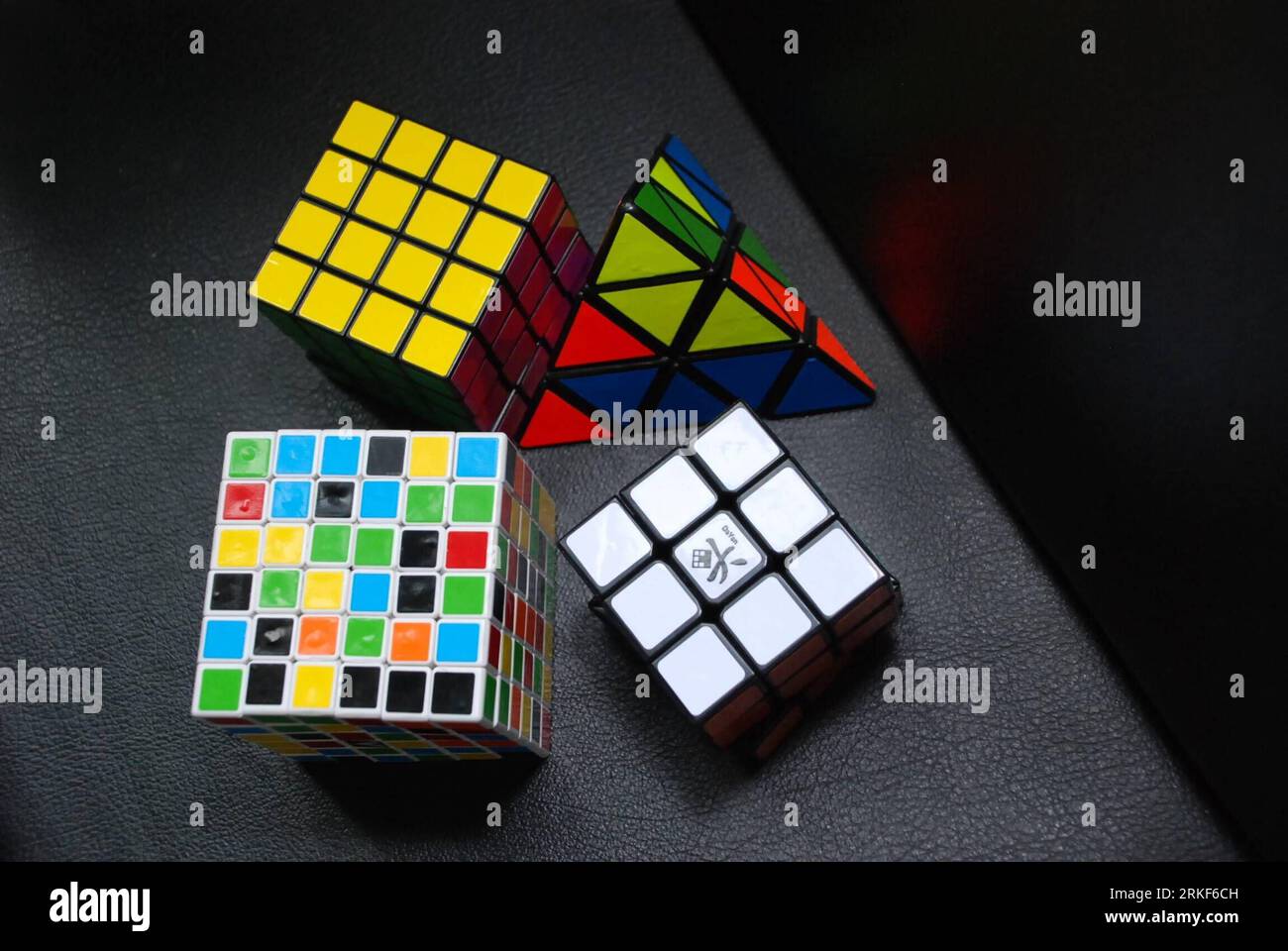
Credit: www.alamy.com
Dino Cube
The Dino Cube is a unique twist on the classic Rubik’s Cube. It has a different shape and moves in a special way. This cube is fun and challenges your mind.
Unlike the standard cube, the Dino Cube turns around its corners. Each move rotates three edges around one corner. This makes the puzzle feel different and fresh.
The Design Of The Dino Cube
The Dino Cube has a triangular shape on each face. It has 12 edge pieces and no center pieces. The bright colors make it easy to see the pieces.
How The Dino Cube Moves
This cube rotates by turning its corners. Each turn moves three edge pieces at once. The moves look smooth and flow well.
Challenges Of Solving The Dino Cube
Solving the Dino Cube is easier than the classic 3×3 cube. Still, it needs good focus and logic. The different moves can confuse new solvers.
Why Try The Dino Cube?
The Dino Cube is great for beginners. It helps improve problem-solving skills. It also offers a new kind of puzzle fun.
Axis Cube
Axis Cube offers a variety of Rubik’s Cubes, featuring 15 unique types. Each cube has a different shape and challenge to solve. Perfect for those who enjoy puzzles and want to try new twists.
What Is The Axis Cube?
The Axis Cube is a unique twist on the classic Rubik’s Cube. It looks like a normal cube but turns differently. Its shape changes while you solve it, making it tricky.
Unlike standard cubes, the Axis Cube rotates on a different axis. This causes the puzzle to change shape during the moves. It adds a new challenge for solvers.
How Does The Axis Cube Work?
The Axis Cube moves by rotating around its corners. This changes its form, unlike the usual flat rotations. It looks like the cube is twisting and bending.
These shape changes make it harder to see the colors and patterns. You must think about both shape and color to solve it. This puzzle tests your spatial skills deeply.
Why Try The Axis Cube?
The Axis Cube offers a fresh challenge for cube fans. It is not just about matching colors but also restoring shape. This puzzle is fun for those who want to try something different.
It helps improve problem-solving and thinking in 3D space. The changing shapes keep the solving process exciting. A perfect choice for those who enjoy complex puzzles.
Windmill Cube
The Windmill Cube is a unique twist on the classic Rubik’s Cube. It looks like a normal cube but has a special shape change that makes solving it different. This cube turns into a windmill shape when scrambled, which gives it its name.
Unlike the standard cube, the Windmill Cube has pieces that are not all square. Some are rectangular. This changes how the puzzle moves and how you solve it. The shape-shifting makes it fun and challenging.
The Design Of The Windmill Cube
The Windmill Cube has one layer turned 45 degrees from the others. This creates a windmill pattern when scrambled. The sides look uneven, but the mechanism inside works like a normal 3×3 cube. The shape change can confuse solvers at first.
How To Solve The Windmill Cube
Solving the Windmill Cube requires understanding the shape shift. The puzzle turns like a normal cube but looks different. Start by solving the center pieces, then match the edge pieces. Focus on the shape and colors. The solving method is similar to the classic cube but watch for the shape change.
Why The Windmill Cube Is Popular
The Windmill Cube attracts puzzlers who want a new challenge. Its shape change adds an extra step to solving. It is good for those who know the 3×3 cube well. This cube is fun to twist and looks interesting on a shelf.
Gear Cube
The Gear Cube is a unique twist on the classic Rubik’s Cube. It uses gears inside that turn multiple pieces at once. This makes the puzzle move differently from regular cubes.
Each turn of the Gear Cube causes many parts to rotate together. This adds a new layer of challenge and fun. The gears create a smooth and mechanical feeling when solving.
Design And Mechanism
The Gear Cube has visible gears on its sides. These gears connect pieces and move simultaneously. Turning one face spins connected gears on other sides.
The cube’s design shows the gears clearly. This helps solvers understand how moves affect the puzzle. The mechanical look attracts many puzzle lovers.
Difficulty Level
The Gear Cube is harder than a normal 3×3 cube. The gears limit how you can turn the faces. Moves that seem simple can change many pieces at once.
Solving the Gear Cube requires new strategies. You must think about how gears will move all parts. This makes it a fun challenge for all skill levels.
Popular Variations
There are different versions of the Gear Cube. Some have bigger or smaller gears. Others mix the gears with shapes that twist differently.
These variations add more difficulty or new solving styles. They keep the puzzle interesting for those who want more challenge. Collectors enjoy having different Gear Cube models.

Credit: www.youtube.com
Frequently Asked Questions
What Are The Most Popular Types Of Rubik’s Cubes?
The most popular Rubik’s Cubes include the 3×3, 2×2, 4×4, and Pyraminx. Each offers unique solving challenges and varying difficulty levels.
How Do Different Rubik’s Cube Types Vary In Complexity?
Cube types vary by the number of pieces and layers. More layers generally mean more complex solving techniques and longer solve times.
Which Rubik’s Cube Is Best For Beginners?
The 2×2 Rubik’s Cube is ideal for beginners. It has fewer pieces and simpler algorithms, making it easier to learn.
Can Advanced Rubik’s Cubes Improve Solving Skills?
Yes, advanced cubes like 5×5 or Megaminx develop problem-solving and spatial skills. They challenge users with more complex patterns.
Conclusion
Exploring different types of Rubik’s Cubes shows how fun puzzles can be. Each cube has its own challenge and style. You can choose one that fits your skill and interest. Trying new cubes keeps your mind sharp and focused. Puzzle solving builds patience and problem-solving skills too.
Start small and enjoy the process step by step. There’s always a cube waiting to test your thinking. Keep twisting and turning; the fun never ends.